Standing Decides More Than the Merits
Before a court considers whether something is lawful, it decides whether the person asking is entitled to ask. That threshold settles more cases than any doctrine.

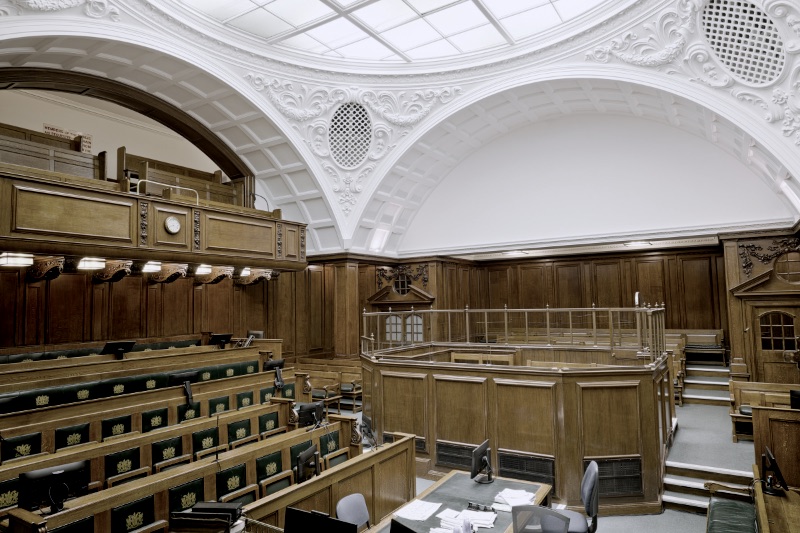
Carol M. Highsmith — Public domain, via Wikimedia Commons
A federal court cannot answer a legal question because the question is interesting. It can only decide an actual dispute between parties with a real stake, which is a constitutional limit rather than a procedural preference.
The requirement is sensible and its consequences are enormous. A plaintiff has to show a concrete injury, traceable to the conduct complained of, that a ruling would actually redress. Fail any part and the court never reaches whether the conduct was lawful, whatever its jurisdiction would otherwise allow.
This produces a category of government action that is difficult to challenge not because it is clearly lawful but because the harm it causes is spread too thinly across too many people.
An injury shared by everyone is, for these purposes, an injury belonging to no one.
The logic is defensible. A rule allowing anyone to sue over anything would turn courts into a general forum for policy disagreement, which is what legislatures are for and what the types of case a federal court hears are deliberately not.
But the doctrine is not neutral in its effects, and the pattern of who clears the threshold is worth stating. A regulated firm can almost always show a concrete injury, because compliance costs money and the money is measurable.
A diffuse public benefit that a rule was meant to produce is harder to convert into a personal injury. So challenges to regulation clear the bar more easily than challenges to its absence, which is a structural tilt rather than a bias of any judge.
Timing compounds it. Standing is assessed when the suit is filed, so a harm that has not yet materialised is speculative and a harm that has finished may be moot. The window in which a claim is live can be narrow.
There is also a quiet effect on what agencies do. Officials know which decisions will be tested and which will not, and that knowledge shapes the record they build. Actions unlikely to face a plaintiff attract less internal scrutiny.
None of this appears in the coverage. A dismissal on standing is reported as a case being thrown out, which reads as a judgement about the merits when it is a judgement about the plaintiff. The published opinions say which.
The useful discipline for a reader is to check which happened. The opinion says so explicitly, usually early, and the difference between lost on the merits and never reached is the difference between a settled question and an open one.
It matters because an unresolved question does not stay unresolved. It is answered anyway, by whoever is acting, in the absence of anyone with the standing to ask a court whether they may.
The asymmetry between challengers is the part with the clearest consequences.
A regulated firm can always show injury from a rule, because compliance costs it money, so a challenge from that direction is heard on its substance.
A person harmed by a rule being too weak has a far harder case to make, since diffuse harm is exactly what the doctrine is built to exclude.
The result is that the same body of law is reviewable from one side and largely unreviewable from the other, without anyone having decided that it should be.
Associational standing softens the doctrine and imports its own requirement, since an organisation must show that an identifiable member was harmed.
That returns the problem to where it started: somebody specific must be injured, and diffuse harms remain outside the courthouse whatever their scale.
Further reading
- Types of casesAdministrative Office of the U.S. Courts
- Title 28, Jurisdiction and VenueOffice of the Law Revision Counsel, U.S. House
- United States Courts OpinionsU.S. Government Publishing Office
Ruth Okonkwo writes for The 13th Bell on law. This piece was edited and fact checked before publication.
Get The 13th Bell in your inbox