Sanctions on the Court, Not the Judges
The United States on Friday designated the International Criminal Court itself for sanctions, hours after a former ICC judge won the Nobel Peace Prize. Washington built in a six-month grace period for some of the measures, and what the court’s member states do with it will decide whether the designation bites.

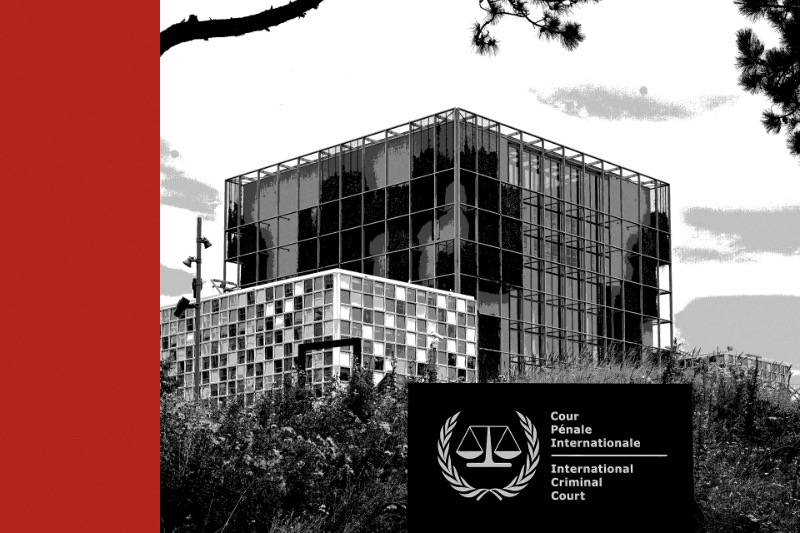
Ymblanter — CC BY-SA 4.0, via Wikimedia Commons
The United States imposed sanctions on the International Criminal Court on Friday, 9 October, naming the court as an institution rather than its judges and prosecutors one by one. In a press statement, the State Department said the court was designated under section 1(a)(ii)(A) of Executive Order 14203. “We will ban transactions with this rogue court, cutting off their resources and crippling its ability to operate,” the statement said. It added: “Either the ICC will end its threats, or we will end the ICC.”
The announcement came within hours of the award of the 2026 Nobel Peace Prize to Navi Pillay, a South African jurist who was an ICC judge from 2003 to 2012, DW reported. Without naming the United States, the Norwegian Nobel Committee said judges “guard the thin red line between order and chaos” and added that “today, as these same judges are sanctioned, and their institutions are attacked, we need people of courage, vision and determination.”
What the designation does
Until now the American measures fell on people. The court said they covered thirteen judges and prosecutors, among them its president, Tomoko Akane, who was designated in August, DW reported. The Treasury’s sanctions list bears that out: before Friday it named 13 people from the court under the same order, alongside the UN special rapporteur Francesca Albanese and three Palestinian human rights groups. That makes 17 earlier designations in all, the figure the BBC gave as “17 of the ICC’s judges and officials.” Friday’s step reaches the institution. Al Jazeera reported that it blocks “all property and interests in property” the court has in the United States and prohibits “making of any contribution or provision of funds, goods, or services by, to, or for the benefit” of the court. The court has about 900 staff, and Al Jazeera noted that sanctioning the whole entity makes it harder for the court to insulate itself than sanctioning individuals did.
Not everything bites at once. The Treasury’s Office of Foreign Assets Control issued four general licences with the designation. The first authorises transactions “ordinarily incident and necessary to the maintenance or wind down of operations” involving the court, including “States Parties’ payments” and staff salaries, until 12:01 a.m. eastern time on 7 April 2027, just under six months away. The others, which carry no end date, cover telecommunications and enterprise software, pension payments, and the detention of nine named prisoners, among them the former Philippine president Rodrigo Duterte. The BBC said the grace period means member states can keep paying for the court’s operations in the meantime. The State Department said it had structured the action “to provide an opportunity for States Parties to negotiate and present a solution to address our concerns.”
The court’s answer
The court called the designation “an assault on the rule of law and on the very foundations of the international legal order” in a press release. Its president, Tomoko Akane, said: “The Court will continue to fully discharge its mandate, with independence and impartiality, acting only on the basis of the law and the evidence, for the sake of the countless victims of grave crimes.” The release then turned to the 125 states that created the court. “The Court cannot stand alone,” it said. “Its fate now rests also in the hands of the States that created it.”
The court had prepared. William Schabas, a professor of international law at Middlesex University, told Al Jazeera that the court had been preparing for more than a year. “They have been developing a plan B on how to get around this,” he said, including moving some US-made software to European alternatives and ending its relationship with the French insurer Axa, which does business with the US. An Atlantic Council analysis said the court decided last year to replace Microsoft Office with a European alternative. Schabas said it was not yet clear how significant the sanctions would be.
What its members can do
Eight governments issued a joint statement. The foreign ministers of Britain, Denmark, France, Germany, Italy, the Netherlands, Canada and Japan said they “regret and strongly disagree” with the sanctions, which “will have a significant impact on the Court’s work, its dedicated staff and their families” if put into effect, Al Jazeera reported. The Dutch foreign minister, Tom Berendsen, whose country hosts the court, said the sanctions would not take effect immediately. “The six-month period before the sanctions take effect creates scope for dialogue,” he said.
The Belgian foreign minister, Maxime Prevot, said Belgium was calling for activation of the EU Blocking Statute and would raise support for the court with EU foreign ministers on Monday and at the next European Council. The Atlantic Council’s Lize de Kruijf wrote that the statute would bar EU persons and companies from complying with the designation and make American court rulings enforcing it unenforceable in the bloc. She also set out its limits. Banks risk losing access to the US financial system, the statute offers no compensation to companies that lose American business by complying with it, and Axa’s exit showed that firms may quietly wind down their business with the court instead. She added that Berendsen had said the Netherlands asked the European Commission to prepare to activate the statute in case the whole court was sanctioned.
What Washington says it wants
The State Department framed the issue as jurisdiction over Americans. “The United States and its people are not subject to the jurisdiction of the ICC,” it said, adding: “We expect our allies, many of whom are part of the ICC and that rely on American servicemembers for their defense, to rein in the court.” Al Jazeera reported that the administration has pointed to the court’s Afghanistan investigation and to its arrest warrants for the Israeli prime minister, Benjamin Netanyahu, and the former defence minister, Yoav Gallant. Netanyahu thanked the administration for its “leadership.” “The ICC is not a court,” he said, according to DW. “It is a political body that poses a mortal threat to law abiding democracies worldwide and to the very idea of national sovereignty.”
Two points in the coverage do not line up. Al Jazeera describes the Afghanistan investigation as ongoing, while the BBC describes the inquiry into US soldiers as one the court has since closed. DW gave a third account: since 2020 the investigation has focused on the Taliban and “deprioritize[d]” alleged American wrongdoing, though it can still include it. Al Jazeera also noted that the court has not sought to prosecute any US citizen, and that a 2002 American law already prohibits extraditing US citizens to the court. The BBC added that the new sanctions do not say the Netanyahu warrants must be withdrawn before the measures can be lifted, which leaves the terms of any exit unstated.
The cases behind it
The practical risk is to the court’s docket. Ryan Goodman of New York University School of Law told the BBC that if the court became unable to try cases, detainees awaiting trial or judgment could have to be released. Among those awaiting trial is Duterte, the BBC noted. The court found him fit to stand trial on Thursday. The Atlantic Council’s Gissou Nia listed what the court has done in the past year: a Sudanese militia chief convicted, arrest warrants unsealed for Taliban leaders, charges confirmed against Joseph Kony, a Central African Republic rebel leader convicted. She wrote that none of those cases involves American defendants.
UN Secretary-General António Guterres, through his spokesman, called the designation “a serious blow to our collective pursuit of international criminal justice, of which the ICC is a key pillar,” UN News reported. Al Jazeera noted that the judges already under sanction have launched legal challenges in American courts, as have several rights groups.
The calendar is short. EU ministers meet on Monday, and the grace period runs about six months. The State Department’s statement says that if the states’ efforts “do not bear fruit, we will continue to adjust accordingly.” Washington has put a deadline on a measure it has already imposed, and it has left the court’s members to decide what they will do before it runs out.
Sources
The text of the designation, the quotations from the secretary of state’s statement and the executive order citation are from the State Department. The court’s reaction, Akane’s remark, the figure of 125 member states and the thirteen judges and prosecutors are from the court’s press release. The general licences, their dates and the count of earlier designations are from the Treasury’s Office of Foreign Assets Control and its sanctions list. The Nobel Committee’s words are from its announcement. The property block, the staff figure, Schabas’s remarks, the joint statement, Berendsen’s and Prevot’s remarks, the Afghanistan and warrants background and the legal challenges are from Al Jazeera. The Nobel timing, Akane’s August designation, the Afghanistan account and Netanyahu’s remarks are from DW. The BBC’s figure of 17, the Goodman and Duterte points and the account of the Netanyahu warrants are from the BBC. The blocking statute analysis, the case list and the Microsoft Office point are from the Atlantic Council. Guterres’s statement is from UN News.
Further reading
- Imposing Sanctions on the International Criminal CourtU.S. Department of State
- International Criminal Court Designation and General LicensesU.S. Treasury, OFAC
- The ICC strongly rejects US sanctions against the institutionInternational Criminal Court
- US sanctions International Criminal Court in major escalationAl Jazeera
- European states, Canada, Japan and UN back ICC against US sanctionsAl Jazeera
- US announces sanctions on the International Criminal CourtDW
- US unveils sanctions on ICC in move court condemns as 'assault on rule of law'BBC
- The US just sanctioned the International Criminal Court. What’s next?Atlantic Council
- ‘Serious blow’: Guterres condemns new US sanctions on International Criminal CourtUN News
Nadia Belkacem writes for The 13th Bell on diplomacy and migration policy. This piece was edited and fact checked before publication.
Get The 13th Bell in your inbox