The Return of the Bilateral Deal
Multilateral negotiation has stalled, so states are cutting agreements one pair at a time. The arithmetic of that is worse than it looks.

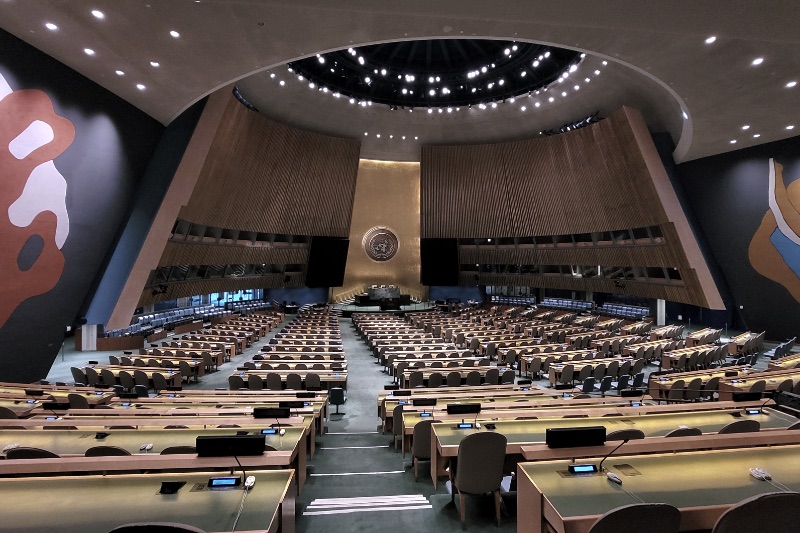
U.S. Department of State from United States — Public domain, via Wikimedia Commons
Multilateral trade rounds have not produced a comprehensive agreement in a very long time, and the institutional machinery for resolving disputes has been allowed to degrade. States that still want liberalized trade have responded by negotiating one on one.
A bilateral deal is faster to conclude and easier to sell domestically, because the concessions can be described narrowly and the beneficiaries named. Those are real advantages and they explain the volume.
The problem is combinatorial. Fifty states with bilateral agreements generate a web of overlapping rules of origin, standards, and dispute procedures that a firm has to navigate separately for each destination. Compliance cost rises with the number of agreements, which means the benefits accrue disproportionately to large firms with legal departments.
The states with the least negotiating leverage do worst under this arrangement, because in a bilateral room there is no coalition to join. That was the specific problem multilateral bodies were built to address, and it is the one nobody has replaced.
The appeal of a bilateral is genuine and should be stated before the objection. Two parties can conclude in months what fifty cannot conclude in a decade, and a negotiator who has watched a round fail is not being cynical in preferring the room that produces a signature.
Domestic politics reinforce it. A bilateral concession can be described narrowly and its beneficiaries named, which is a far easier thing to defend than a package whose gains are diffuse and whose losses are concentrated.
The cost is combinatorial and it lands on firms rather than on governments. Every pair generates its own rules of origin, its own standards recognition and its own dispute procedure, and a firm trading across ten markets navigates ten sets of them.
That complexity is a fixed cost, which means it falls hardest on the smallest exporters. A multinational employs people to manage it. A firm with forty staff does not, and simply trades less.
The trade statutes accumulate accordingly. Each agreement arrives with implementing provisions, schedules and tariff lines, and the resulting body of law is legible only to specialists.
The dispute question is the sharper one. The multilateral machinery exists precisely so that a small state's complaint against a large one is heard somewhere other than a room where the large one sets the terms.
Where that machinery is degraded, the alternative is not a neutral forum but a bilateral consultation, which is a negotiation wearing the vocabulary of adjudication.
The depositary record makes the drift visible in a way commentary does not. The instruments concluded in recent years are overwhelmingly narrow and paired, and the comprehensive ones belong to an earlier period.
The states with the least leverage do worst, which is the part usually acknowledged and rarely acted on. In a bilateral room there is no coalition to join and no smaller party to align with, because there is no third party at all.
That was the specific problem multilateral bodies were built to address, and it is worth being clear that they addressed it imperfectly and at considerable cost in speed.
The defensible version of the current approach treats bilaterals as building blocks rather than substitutes, negotiated on compatible templates so that they can later be stitched together.
That requires a discipline nobody is currently exercising. The administering agency publishes the agreements, and reading them side by side shows how little effort has gone into making them fit one another.
One further asymmetry deserves naming, because it compounds quietly. A bilateral is renegotiated bilaterally, which means a change of government in the larger party can reopen terms the smaller party has already built an industry around.
A multilateral commitment is harder to reopen for exactly the reason it is harder to conclude. The cost of assembling agreement the first time is what makes it expensive to unpick later, and that durability is the thing being traded away for speed.
Thomas Rennick writes for The 13th Bell on world. This piece was edited and fact checked before publication.
Get The 13th Bell in your inbox