The Agenda Is a Forecast
Agencies publish twice a year what they intend to regulate and when. The document is treated as a plan and behaves like a weather report.

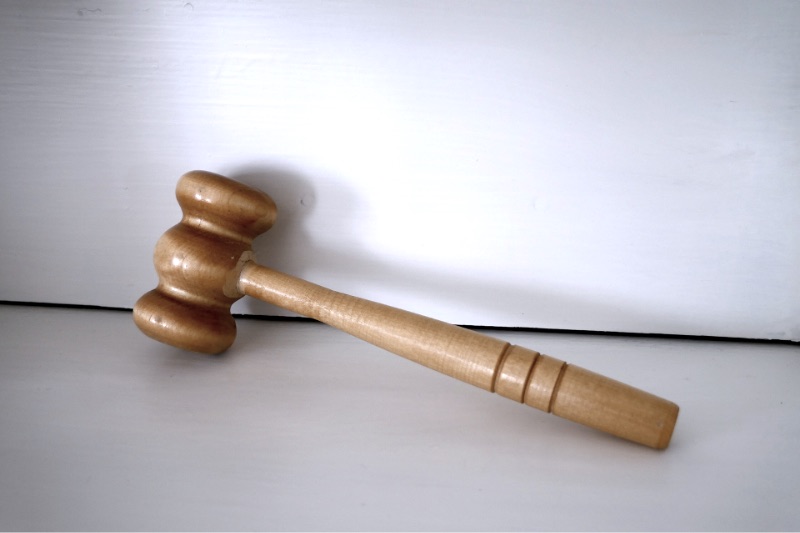
Dietmar Rabich — CC BY-SA 4.0, via Wikimedia Commons
A government that regulates continuously creates a planning problem for everyone it regulates. Firms need to know what is coming and when.
The provision requiring a published agenda answers that by obliging agencies to say twice a year what rules they intend to issue and on what timetable.
It is one of the more useful documents government produces, and it is systematically misread by almost everyone who uses it.
The dates are estimates made by people with no control over most of what determines them, which is the ordinary condition of any forecast.
A rule slips because a comment period produced more material than expected, or because a review took longer, or because the leadership changed. None of that is in the agency's gift.
There is a use for the document that its authors probably did not intend and that makes it more valuable than its dates suggest.
The published agenda records the intention and the date, and comparing successive editions is the only way to see how far intentions travel.
Read across agencies rather than down one, the agenda is the clearest available statement of what an administration is actually trying to do.
Reading a run of them shows the same items reappearing edition after edition with the date moved forward, which is not dishonesty but is not a plan either.
Manifestos and speeches describe intentions in terms designed to command assent. The agenda describes them in terms an agency has to be able to defend.
The consequence is that the document is most reliable about what an agency is thinking about and least reliable about when anything will happen.
An administration that says one thing publicly and lists another is telling you which it means, and the listing is the part with consequences attached.
Users treat it the other way round, because the date is a number and the intention is a paragraph, and a number always looks more solid than a paragraph.
The long-term category is where this matters most, since an item parked there may be genuinely planned or may be a placeholder kept alive to preserve an option.
Nothing distinguishes the two from outside, and the difference is the whole question for anyone deciding whether to invest against a rule arriving.
The register is where intention becomes fact, and the gap between the two documents is the interval in which every affected party has to guess.
Guessing well is worth money, which means the agenda is read closely by the parties with counsel and essentially not at all by anyone else.
That is the familiar asymmetry, and here it is sharper than usual because the document is free, public and genuinely informative to a reader who knows how to weight it.
The administrative framework does not require an agency to explain a slip, so a date that moves three times in a row carries no obligation to say why.
A one-line reason would cost almost nothing and would let a reader distinguish a rule stuck in analysis from one that has been quietly abandoned.
The other missing element is any account of what was dropped. Items leave the agenda without notice, and their disappearance is the most informative event in the whole cycle.
A rule an agency has stopped pursuing is a decision about policy, taken by omission, and it is the one thing the document does not report.
None of this is an argument for holding agencies to their dates, which would produce worse rules issued to a schedule rather than better ones.
It is an argument for reading the agenda as what it is, and for two small additions that would make it far more honest: a reason when a date moves, and a line when an item leaves.
Further reading
- Regulatory agenda, 5 U.S.C. § 602Office of the Law Revision Counsel, U.S. House
- Unified Agenda of Regulatory ActionsOffice of Information and Regulatory Affairs
- The Federal RegisterOffice of the Federal Register
Marguerite Devlin writes for The 13th Bell on power. This piece was edited and fact checked before publication.
Get The 13th Bell in your inbox