Registration Is a Dormant Institution
A country maintains a list of who could be called up, has not called anyone up in fifty years, and has never decided whether it would.

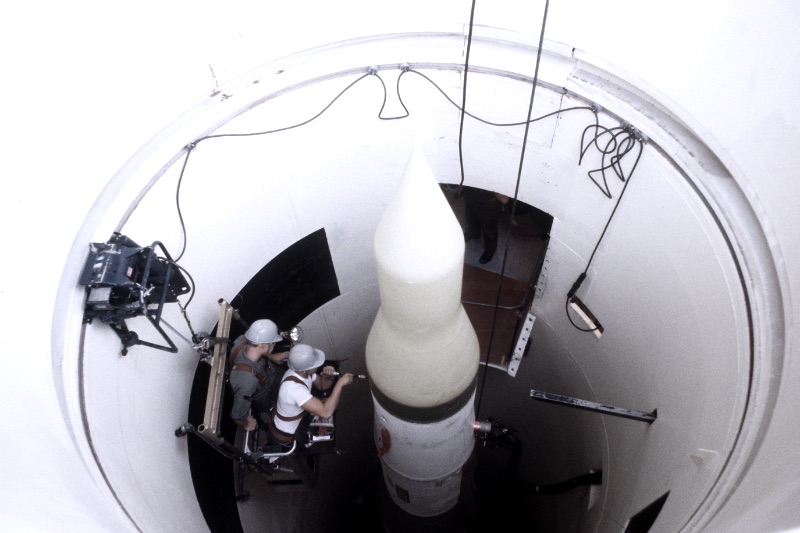
Public domain, via Wikimedia Commons
Some institutions persist without operating. They are funded, staffed and legally live, and the thing they exist to do has not been done within living memory.
The registration requirement is the clearest example. A list is maintained continuously, at real cost, against a mobilisation that has not occurred in fifty years.
The argument for keeping it is straightforward and reasonable. Building such a list from nothing during a crisis would take longer than the crisis would allow.
An insurance policy that is never claimed on is not therefore a waste, which is the same case made for stockpiles and for sealift, and it is a good case.
What distinguishes this one is that nobody has decided what would trigger the claim, or under what conditions the list would be used.
The database itself deserves a moment, because it is one of the largest continuously maintained registers of citizens that exists.
The agency that maintains it describes its function clearly enough, and the description stops at the point where the interesting question begins.
It is kept accurate against address changes, matched against other records, and held indefinitely, for a purpose that has not been invoked since the people in it were born.
The register exists. The authority to call up exists. What does not exist is any settled view of the circumstances in which a legislature would actually authorise it.
Any other agency proposing to build such a register today would face a substantial argument about necessity and proportionality.
That absence is not an oversight. It is the compromise: keep the capability, avoid the argument, and leave the decision to a future that will have to make it under pressure.
This one faces none, because it already exists, and existing is the strongest position any institution can occupy.
Deferral of that kind has a cost that accrues quietly. An institution nobody expects to use is an institution nobody scrutinises, and its rules drift out of alignment with the society it would draw from.
The regulations set out who must register, and the categories were drawn when the composition of the force and of the country were both different.
Every serious argument about whether the obligation should extend more broadly runs into the same wall: resolving it requires debating whether the institution should exist.
So the question is answered narrowly, in litigation and in administrative adjustment, rather than in the legislature that would have to authorise any actual use.
The enforcement position compounds the strangeness. Registration is required, non-registration carries consequences, and prosecution has been effectively dormant for decades.
Compliance is instead secured by attaching registration to other things a young person needs, which works, and which means the obligation is enforced by administrative inconvenience rather than by law.
An obligation enforced that way is one most people satisfy without ever understanding what they have agreed to, which is a poor foundation for something this serious.
The enacted history shows the framework surviving repeated attempts to end it and repeated attempts to expand it, which is what a genuine stalemate looks like.
Both sides of that stalemate have a coherent position. One holds that a state which may need to compel service should maintain the means. The other holds that a capability nobody will authorise should not be maintained at all.
What neither side has is a description of the circumstances in which it would be used, and without that the debate has no way to resolve.
The comparison with the war powers framework is exact. In both cases a legislature has retained an authority it does not wish to exercise and has declined to say when it would.
The difference is that this one requires an obligation of individual citizens, continuously, in peacetime, for a purpose the state has not defined.
The honest options are to end it or to state the conditions. Maintaining a list against a decision nobody will describe is the one position that cannot be defended on its own terms.
Further reading
- Registration, 50 U.S.C. § 3802Office of the Law Revision Counsel, U.S. House
- Selective Service SystemSelective Service System
- Title 32, National DefenseU.S. Government Publishing Office
Gregor Vance writes for The 13th Bell on security. This piece was edited and fact checked before publication.
Get The 13th Bell in your inbox