The Question the Court Rewrote
The Supreme Court will decide whether a challenger to a race-neutral school admissions policy must first show the targeted group lost ground in aggregate. It wrote that question itself, and the Maryland school board says the case cannot answer it.

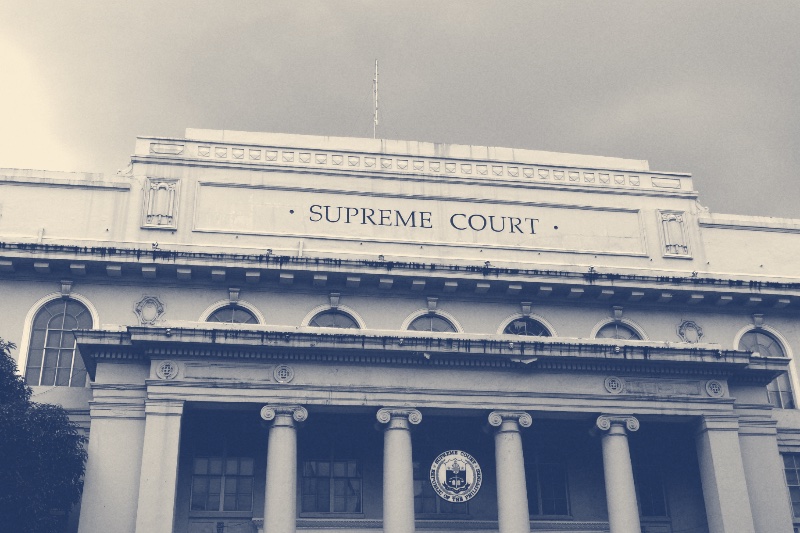
G. Edward Johnson — CC BY 4.0, via Wikimedia Commons
The Supreme Court agreed on 19 October to hear a challenge to the admissions policy for Montgomery County’s magnet middle schools, but only on a question the justices wrote themselves, not the one the parents’ group asked.
The case is Association for Education Fairness v. Montgomery County Board of Education (No. 26-12). The 19 October order list grants review “limited to the following question: Whether a plaintiff challenging a facially neutral admissions policy as racially discriminatory must establish that the targeted racial group suffered an aggregate disparate impact relative to its share of the applicant pool.” The same order list turned away Gwynne Wilcox’s petition over her removal from the National Labor Relations Board, which The 13th Bell covered this morning. That one ended without a word. This one got a question rewritten from the bench.
The petition, filed on 29 June by the Pacific Legal Foundation for a parents’ group, asked something different: whether a plaintiff alleging a discriminatory purpose “must show that the criteria produced a disparate impact on the targeted racial group before a court may consider evidence of discriminatory intent.” The Court dropped the words about what comes first and kept the benchmark. That matters because part of the school board’s answer to the petition was about the order of the inquiry. No circuit, the board argued, applies “the rigid sequencing rule in the question presented.”
What did the Court agree to decide?
It agreed to decide what a plaintiff must show about numbers when challenging a race-neutral admissions policy as intentionally discriminatory. The framework is Village of Arlington Heights v. Metropolitan Housing Development Corp., 429 U.S. 252 (1977): a policy that is neutral on its face can still violate the Equal Protection Clause if a discriminatory purpose was a motivating factor. The courts of appeals disagree, the petition says, about whether the plaintiff must also show that the targeted group did worse in aggregate than its share of the applicants.
The petition puts the Fourth Circuit, which covers Maryland, and the First Circuit on one side: a challenger fails unless the group’s share of admissions fell below its share of the applicant pool. It puts the Second and Third Circuits on the other. The board disputes that any split exists that would change the result. The descriptions in the table are the petitioner’s.
| Circuit | Case | Petition’s description of the rule |
|---|---|---|
| Fourth | Coalition for TJ v. Fairfax County School Board, 68 F.4th 864 (2023) | Aggregate benchmark required (applicant pool) |
| First | Boston Parent Coalition v. School Committee, 89 F.4th 46 (2023) | Aggregate benchmark required (applicant pool) |
| Second | Chinese American Citizens Alliance v. Adams, 116 F.4th 161 (2024) | Aggregate showing not required |
| Third | Sargent v. School District of Philadelphia, 165 F.4th 727 (2026) | Aggregate impact “not the only permissible form of proof” |
Has the Court turned this question away before?
Twice. On 20 February 2024 it denied review in the Fairfax County case over Thomas Jefferson High School for Science and Technology. Justice Alito, joined by Justice Thomas, dissented, writing that the Fourth Circuit’s holding “effectively licenses official actors to discriminate against any racial group with impunity as long as that group continues to perform at a higher rate than other groups.”
On 9 December 2024 it denied the Boston exam-school case. Justice Alito, again joined by Justice Thomas, dissented. Justice Gorsuch agreed with the denial because Boston had replaced the challenged policy, which he said “greatly diminish[es] the need for our review.” He added that Justice Alito had raised “a number of significant concerns about the First Circuit’s analysis, concerns I share and lower courts facing future similar cases would do well to consider.” A replaced policy is also what the Montgomery County board now says it is being sued over.
What are the facts of the Montgomery County case?
The dispute concerns the county’s four magnet middle school centres, a STEM and a humanities programme in each of the Upcounty and Downcounty regions. The petition says that after a consultant’s report made public in March 2016, the district ran what it called a “field test” using peer grouping and local norming. The parents allege that was meant to rebalance the programmes by race. At the Takoma Park STEM programme, the petition says, Asian Americans were 45.6 per cent of invitees in the three years before the field test and 31.5 per cent in the three test years.
The district then moved to a lottery open to students at or above the 85th percentile on a locally normed assessment. That is the policy the amended complaint challenges. The district court dismissed the suit, and in an unpublished per curiam opinion of 3 February 2026, issued without oral argument, the Fourth Circuit affirmed. According to the board’s brief in opposition, the Fourth Circuit noted that the parents conceded their complaint did not plead the impact Coalition for TJ requires; they made the concession to preserve the point for further review.
Why does the school board say this case cannot decide it?
The board says the lower courts dismissed on a second, independent ground: that the complaint did not plausibly allege discriminatory intent. A win on impact, on that account, would not revive the suit. The brief, filed on 27 August after the Court asked for a response the board had first waived, calls the case “an exceptionally poor vehicle” and says the parents “did not meaningfully challenge” the intent ruling on appeal. It describes the lottery, the “Pandemic Plan,” as a response to COVID-19, and the field test the petition dwells on as “a superseded policy.”
The petition answers that the Fourth Circuit affirmed “solely based on” the failure to plead aggregate impact, and that it “did not pass on” whether the lottery was the field test’s successor. The two sides describe the same short opinion differently. The order granting review gives no reasons, and the Court took the case after it had been listed for its 9 and 16 October conferences.
What happens next?
Briefing on the merits comes next; the docket lists no argument date. If the Court holds that a plaintiff need not show aggregate impact against the applicant pool, the Fourth Circuit’s precedent falls and the board’s intent ground becomes the next fight. If it holds that the benchmark is required, the parents lose on the point they conceded below.
The petition says the cases involve five of the largest school districts in the country and points to litigation still running in Boston and New York City. What the Court did on Monday is narrower. It took a case the board says turns on something else, and then wrote the question itself.
Further reading
- Order List, 19 October 2026Supreme Court of the United States
- Docket No. 26-12, Association for Education Fairness v. Montgomery County Board of EducationSupreme Court of the United States
- Petition for a writ of certiorariPacific Legal Foundation, for petitioner
- Brief in oppositionHogan Lovells, for Montgomery County Board of Education
- Coalition for TJ v. Fairfax County School Board, No. 23-170 (Alito, J., dissenting from denial of certiorari)Supreme Court of the United States
- Boston Parent Coalition v. School Committee, No. 23-1137 (statement of Gorsuch, J., and Alito, J., dissenting)Supreme Court of the United States
Ruth Okonkwo writes for The 13th Bell on the courts and the litigation that shapes them. This piece was edited and fact checked before publication.
Get The 13th Bell in your inbox