The Line Is Held by a Sentence
One short criminal provision separates the armed forces from domestic law enforcement. Almost everything difficult sits in the exceptions to it.

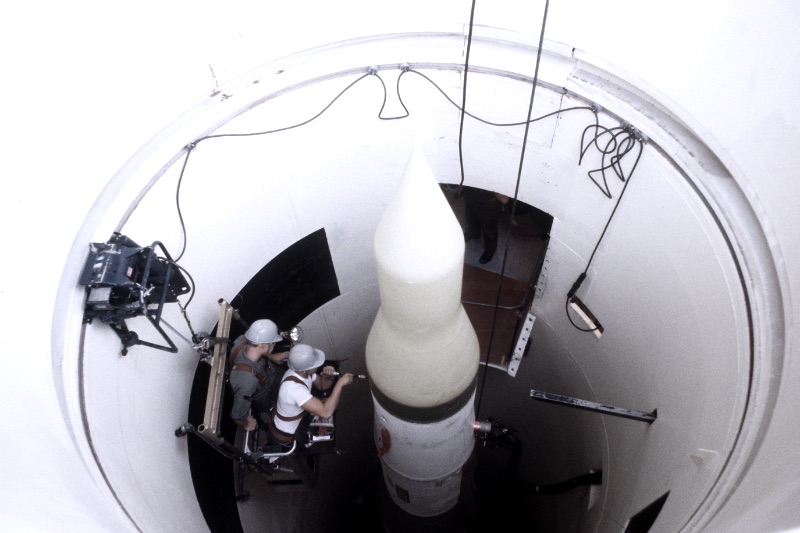
Bob Harvey — CC BY-SA 2.0, via Wikimedia Commons
A state with an army faces a question every state has had to answer: what that army may do to the people it defends.
The provision is one sentence. Using the armed forces to execute the laws is a crime, except where the Constitution or an Act of Congress expressly authorises it.
A single criminal sentence is a strange way to carry a constitutional principle, and its brevity is why so much turns on the exception rather than the rule.
The exception is not narrow. Congress has expressly authorised military involvement in a range of circumstances, and each authorisation is a genuine carve-out.
So the working question is never whether the provision applies. It is whether some other statute has already displaced it for the situation at hand.
There is a definitional gap worth stating plainly, because it surprises people who assume the provision covers everything in uniform.
The enacted framework contains those authorisations, accumulated over a century and never consolidated, so the answer requires assembling several instruments.
By its terms it names particular services, and coverage of the others rests on policy and on separate authorities rather than on the criminal provision itself.
The distinction the case law has settled on is between direct and indirect assistance, and it does a great deal of work.
A restraint carried partly by statute and partly by departmental policy is a restraint that can be narrowed without legislation.
Providing equipment, training, intelligence or transport to civil authorities is indirect and permitted. Arresting, searching and seizing is direct and is not.
That is not a hypothetical weakness; it is the ordinary way administrative rules change, quietly and without a vote.
That line is workable and it degrades as the assistance becomes more capable, because equipment and analysis can determine an outcome as surely as an arrest.
Anyone assessing how firm this line is should be reading the policy documents rather than the statute, which is an odd place for a constitutional principle to live.
The regulations governing support to civil authorities set out the approval chain, and the chain is the practical constraint most of the time.
A request has to be made by a civil authority and approved at a senior level, which slows everything and creates a record, both of which are protections.
The reserve components are where the framework becomes genuinely confusing, and the confusion is not accidental.
A National Guard unit under state control is not covered by the provision at all, and the same unit federalised is.
So identical soldiers doing identical work fall on opposite sides of a criminal prohibition depending on an order nobody outside the chain can see.
That distinction serves federalism and it means the public cannot tell, from watching, which legal regime applies to the people in front of them.
The published decisions are thin, because the provision is criminal and has essentially never been prosecuted.
A rule with no enforcement history is held in place by institutional culture rather than by fear of the penalty, and culture is the thing that erodes without anyone deciding.
The professional military has generally been the strongest constituency for the line, which is the healthiest possible arrangement and not a guarantee.
What would strengthen it is unglamorous: consolidate the exceptions into one schedule, so that anyone can read in a single place what has been authorised.
At present the rule is short and clear and the exceptions are scattered, which is the exact inverse of how a constraint on force should be written.
A principle this important should not require a specialist to establish whether it currently applies.
Further reading
- Use of Army and Air Force as posse comitatus, 18 U.S.C. § 1385Office of the Law Revision Counsel, U.S. House
- Title 32, National DefenseU.S. Government Publishing Office
- United States Courts OpinionsU.S. Government Publishing Office
Gregor Vance writes for The 13th Bell on security. This piece was edited and fact checked before publication.
Get The 13th Bell in your inbox