The Ban Is a Verdict
Germany's constitution lets a court abolish a political party. It has done so twice, and its last refusal turned on a test that gets easier to meet the larger a party grows.

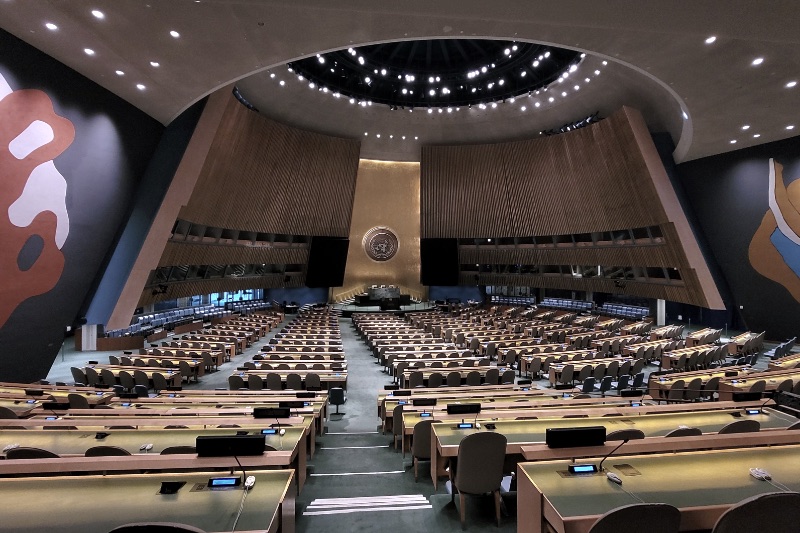
Eisensafran — CC BY-SA 4.0, via Wikimedia Commons
Most democracies deal with parties they fear at the ballot box. Germany wrote a second option into its constitution.
Article 21 of the Basic Law declares unconstitutional any party that, by its aims or the behaviour of its adherents, seeks to undermine or abolish the free democratic basic order or to endanger the existence of the state.
It gives the decision to one body only. A party is not banned by a minister, a parliament or an intelligence agency. It is banned by the Federal Constitutional Court, and until the court rules it is a party like any other.
The statute governing the court says who may ask. The Bundestag, the Bundesrat and the federal government can apply, and a state government can apply against a party organised only within its own state.
Nobody else can start the process. A petition, a march or a poll cannot bring a case; it can only press the three institutions that can.
The power has been used twice, both times in the 1950s: against the Socialist Reich Party, a successor to the Nazis, in 1952, and against the Communist Party in 1956.
Then it went unused for almost half a century, and the two attempts since have both failed.
The first case against the far-right NPD collapsed in 2003 before any ruling on the merits, when it emerged that state informants held positions in the party's leadership. The court could not judge a party whose conduct the state had partly authored.
The second produced the judgment that now defines the power.
The 2017 judgment found that the NPD's aims were indeed directed against the free democratic basic order. The court said so unanimously, and in plain terms.
It declined to ban the party anyway. A ban requires more than hostile aims, the court held; there must be concrete and weighty indications that the party could actually achieve them.
The NPD had none. It held no seats in any state parliament and had no realistic path to power, so its hostility to democracy, however sincere, was not a threat democracy needed a court to remove.
The reasoning was careful and widely admired. It also built an asymmetry into the power that is easy to miss.
The requirement of real potential means the court will only ban a party that is large enough to matter. A party large enough to matter is, by definition, one that a great many voters have chosen.
The legal case for a ban and the democratic cost of one therefore rise together. The stronger the argument that a party threatens the order, the more citizens a ban removes from it.
Parliament responded to the judgment by amending Article 21 the same year. A party with unconstitutional aims can now be excluded from state funding without having to meet the potential test at all.
The court used that route in 2024, cutting the NPD's successor off from public financing for six years. It is the instrument designed for parties too small to ban.
There is nothing in between. For a party with hostile aims and real support, the only constitutional tool is abolition, and its consequences are total: dissolution, a ban on substitute organisations, and the loss of seats its members won.
European law adds its own limits. The European Court of Human Rights has accepted that a party can be dissolved, but only where the threat is real and the measure proportionate to it.
The Venice Commission's guidelines make the same point more bluntly: prohibition should be an exceptional measure of last resort, applied only where a party advocates or uses violence or poses a genuine threat to the democratic order.
Time is the other constraint nobody campaigning for a ban tends to mention. The second NPD case took more than three years from application to judgment, and that was for a party with no seats to lose.
A court asked to abolish a party with deputies, ministers or a claim on government would be deciding on evidence gathered years earlier, about a party that may by then look very different.
None of this makes the power illegitimate. A constitution written in the shadow of a dictatorship that came to power through elections was entitled to decide that elections alone would not be its only defence.
It does make the power a verdict rather than a policy. It cannot be applied quickly, it cannot be applied lightly, and on the court's own test it can only ever be applied at the moment it is most costly to use.
Further reading
- Basic Law for the Federal Republic of GermanyFederal Ministry of Justice
- Judgment of 17 January 2017, 2 BvB 1/13Federal Constitutional Court
- Guide on Article 11: Freedom of assembly and associationEuropean Court of Human Rights
Nadia Belkacem writes for The 13th Bell on world. This piece was edited and fact checked before publication.
Get The 13th Bell in your inbox