Only the Constitution Gets In
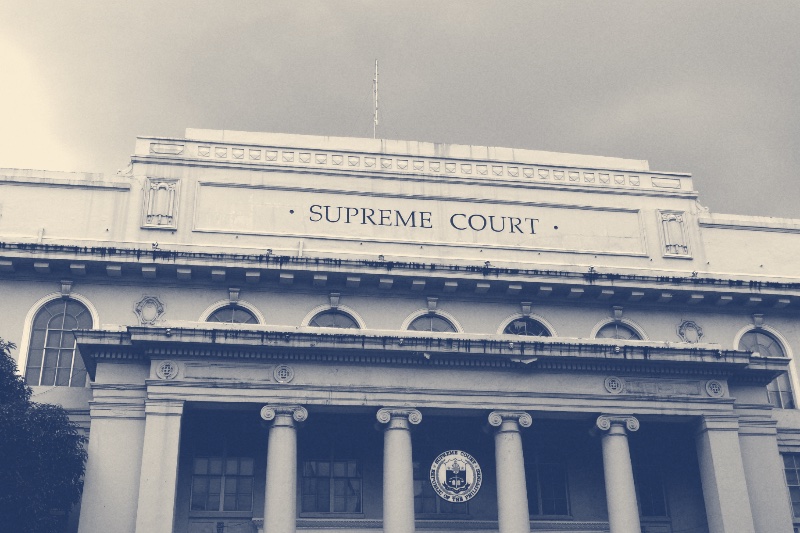
The Trump administration asked the Supreme Court on 21 October to let border wall construction resume in Big Bend. The statute lets courts hear only constitutional challenges to the waivers, and the case turns on whether the major questions doctrine is one.

Carol M. Highsmith — Public domain, via Wikimedia Commons
The Trump administration asked the Supreme Court on Wednesday 21 October to lift a federal judge’s order halting border wall construction in the Big Bend region of Texas, arguing that the judge had no power to hear the only claim she relied on.
The application, Mullin v. Friends of the Ruidosa Church, No. 26A560, was docketed the same day and submitted to Justice Samuel Alito, the Court’s docket shows. Solicitor General D. John Sauer asks for two things: a stay of the preliminary injunction that U.S. District Judge Kathleen Cardone issued in El Paso on 2 October, and an order that treats the application as a petition for certiorari, grants it and “summarily reverse[s]” her without further briefing or argument.
There is no court of appeals in between. The statute that authorises the waivers provides that a district court’s decision “may be reviewed only upon petition for a writ of certiorari to the Supreme Court of the United States,” the application notes, so the Fifth Circuit has no part in the case. The first question for the justices is not about the wall. It is whether a claim that the secretary exceeded the statute could be heard at all. This publication reported the injunction when it was issued.
What does the statute let courts hear?
Only constitutional claims. Section 102 of the Illegal Immigration Reform and Immigrant Responsibility Act of 1996, as amended by the REAL ID Act of 2005, gives the Secretary of Homeland Security “the authority to waive all legal requirements such Secretary, in such Secretary’s sole discretion, determines necessary to ensure expeditious construction of the barriers and roads under this section.” A challenge “may only be brought alleging a violation of the Constitution of the United States,” and “[t]he court shall not have jurisdiction to hear any claim not specified in this subparagraph.” Claims must be filed within 60 days of the waiver decision.
Three waivers are in dispute, each finding that the Big Bend Sector “is an area of high illegal entry” and citing more than 89,000 apprehensions there between 2021 and 2025. The project figures below are the application’s. The government says there have been more than 60 such waivers since 2005 and that, until this case, no court had sustained a challenge to the substance of one.
| Waiver | Signed by | Planned construction, per the application |
|---|---|---|
| 17 February 2026, 91 Fed. Reg. 7297 | Then-Secretary Kristi Noem | About 164 miles of border barrier system |
| 15 May 2026, 91 Fed. Reg. 27,969 | Secretary Markwayne Mullin | Roads and about 17 miles of non-contiguous vehicle barrier in Big Bend National Park |
| 27 July 2026, 91 Fed. Reg. 46,939 | Secretary Markwayne Mullin | About 160 miles of barrier system in the Big Bend and Del Rio Sectors |
The challengers are Friends of the Ruidosa Church, a group formed to preserve a historic church in Ruidosa, Texas; the Center for Biological Diversity; and Danny William Miller Junior, whom the application describes as a Big Bend river guide. SCOTUSblog describes the individual challenger as a local landowner; this piece follows the application.
How did the judge get past the limit?
By holding that the major questions doctrine is itself a constitutional rule. The doctrine is the Supreme Court’s rule that an agency claiming a power of “vast economic and political significance” needs clear authorisation from Congress. In her 14 October memorandum opinion, which the government reproduces in its appendix, Judge Cardone wrote: “While acknowledging that the law is unsettled, the Court rules that the major questions doctrine is a constitutional clear statement rule grounded in separation of powers.” Her reason fits in one sentence: “The source of the skepticism is not linguistic—it is constitutional.” On that footing she found jurisdiction, because the claim “alleges a Constitutional violation.”
On the merits she read the waiver power alongside section 102(a), which directs construction “to deter illegal crossings in areas of high illegal entry.” The challengers’ evidence, which she called unrebutted, was that Big Bend covers more than a quarter of the border yet has accounted for between 0.3 and 2.2 per cent of border-wide apprehensions in each of the last thirty years. “For ‘high illegal entry’ to impose any limit,” she wrote, “it must at least mean, ‘not the lowest rate of illegal entry.’ And the evidence shows that the Big Bend Sector has the lowest rate of illegal entry along the entire U.S.-Mexico border.” She concluded that the waivers “were issued in excess of the Secretary’s authority.”
What does the government argue?
That a statutory claim does not become a constitutional one because the canon behind it has constitutional roots. Sauer relies on Dalton v. Specter (1994), in which the Court held that “claims simply alleging that the President has exceeded his statutory authority are not ‘constitutional’ claims.” He points out that the judge’s own conclusion, that the waivers were issued in excess of the secretary’s authority, is a statutory finding on its face. He also argues the merits in the alternative: “[e]ven assuming that the Secretary’s waiver authority implicates a question of ‘vast economic and political significance,’ Congress did clearly authorize the Secretary both to build border barriers and to waive legal requirements.” He cites a 2019 Ninth Circuit holding that the statute “does not dictate that ‘high illegal entry’ is a comparative determination.”
On harm, the application says contracts have been awarded for five projects, that workers on one had built about three-quarters of a mile of barrier before the injunction, and that suspension costs exceed $460,000 a day by Customs and Border Protection’s estimate. Judge Cardone refused a stay on 21 October, finding the government’s “likelihood of success on appeal is low,” while accepting that it would “experience at least some degree of irreparable harm absent a stay.”
What is not yet known?
When the Court will act. The docket, read on 22 October, listed no deadline for a response and no referral to the full Court. Whether the justices take up the invitation to decide the jurisdiction question summarily, or rule only on the stay, is open. The application asks for summary reversal partly so that other courts do not follow Judge Cardone, and cites a further waiver published on 2 October for a project area in New Mexico.
If the bar is read as the government reads it, a claim is what it alleges, and a major-questions challenge to a waiver cannot be heard. If Judge Cardone’s reading holds, the bar still stands, and a claim gets through it by the name of the canon it invokes.
Further reading
- Application for a Stay of the Injunction, Mullin v. Friends of the Ruidosa Church, No. 26A560Office of the Solicitor General
- Appendix to the application, including the 2 October order and 14 October memorandum opinion (W.D. Tex. No. 3:26-cv-01099)Supreme Court of the United States
- Docket No. 26A560Supreme Court of the United States
- Trump administration asks justices to allow border wall construction to continueSCOTUSblog
Claire Vantassel writes for The 13th Bell on constitutional procedure. This piece was edited and fact checked before publication.
Get The 13th Bell in your inbox