The Magistrate Does the Work
Most of what a federal court actually decides is decided by a judge nobody confirmed, in a proceeding nobody covers.

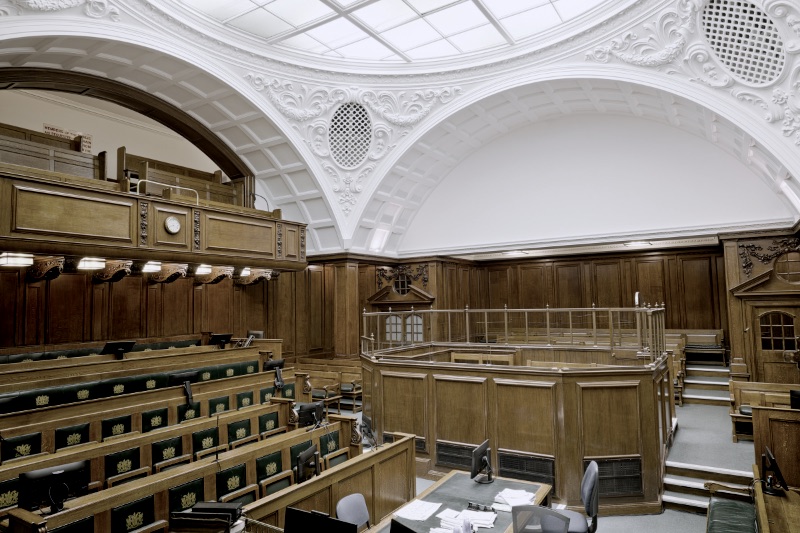
Public domain, via Wikimedia Commons
Coverage of the federal judiciary is coverage of appointments. A vacancy opens, a nominee is named, a hearing is held, and a lifetime seat is filled. That process is important and it accounts for a small share of the judging that happens.
The statute that created magistrate judges did so to absorb work the district courts could not carry, and the work it absorbs has grown steadily ever since.
They are not appointed for life and are not confirmed by the Senate. They are selected by the district judges of their own court, for renewable terms, through a process that produces no hearing and almost no public record.
Consider what a discovery ruling decides. It determines which documents a plaintiff obtains, which witnesses can be questioned, and how much a case will cost to run. In a dispute between parties of unequal resources, the cost is often the outcome.
A judge chosen by other judges is accountable in a way that is real and entirely internal.
A ruling that expands discovery can make a case unaffordable to defend. A ruling that narrows it can make a case impossible to prove. Neither is a technicality, and both are routinely made by a judge whose name will never appear in a news report.
What they handle is the substance of most litigation. Discovery disputes, which decide what evidence a case will actually contain. Preliminary motions. Settlement conferences, where the overwhelming majority of civil cases end.
The settlement conference is the same story in a different register. A judge who tells both sides what a case is worth is exercising enormous influence over the result, in a room with no transcript.
With the parties' consent they can try a civil case outright and enter judgment, which means an entire dispute can be resolved by a judge whose selection was never examined outside the courthouse.
That is by design, because candour is the point of the exercise and candour requires that nothing said be usable later. The confidentiality is defensible. It also means the most consequential conversation in most civil litigation happens entirely off the record.
The consent requirement is the safeguard and it is thinner than it sounds. A party declining consent is telling the court that assigned the case that they would prefer a different judge, which is an awkward thing to do and rarely done.
There is a criminal dimension as well. These judges handle initial appearances, issue warrants and set the terms of pretrial release, which is the decision that determines whether a person awaits trial at home or in custody.
The description of what federal courts handle sets out the categories, and the volume behind those categories is the reason the arrangement exists at all.
Detention before conviction is among the most serious things a court does to a person, and a substantial share of those decisions are made at this level, quickly, on limited information, without appellate attention.
The caseload tables show the shape of it. District courts receive far more than Article III judges could dispose of, and the gap has been filled by expanding the role rather than by expanding the bench.
The selection process deserves more attention than it gets. A merit panel reviews applicants and the district judges vote, which is a reasonable procedure that produces no public record of who applied or why one candidate was preferred.
That is a defensible response to a real constraint, and it has happened without anyone deciding it as a matter of policy. Each expansion answered a local pressure.
Compare that to the confirmation process for a district judgeship, which produces a hearing, a written questionnaire, a paper trail and a recorded vote. The difference in scrutiny is not proportionate to the difference in what the two jobs actually decide.
The visibility problem follows. The published opinions are dominated by appellate work, so the body of law that gets written about is the part these judges do not produce.
Reappointment is the sharper issue. A judge seeking another term is evaluated by the same colleagues whose rulings they may have disagreed with, which is a structural pressure toward agreement that no one intends and everyone can see.
Their rulings are mostly unpublished, unreviewed and, in the discovery context, close to unreviewable, because an interlocutory order is difficult to appeal before the case ends.
None of this suggests the work is done badly. The consistent view of practitioners is the opposite, and the specialisation produces genuine expertise in exactly the areas where district judges have least time.
The observation is narrower. A system that debates lifetime appointments at length while filling most of its judicial capacity through an internal selection nobody reports on has its scrutiny pointed at the wrong altitude.
Further reading
- Jurisdiction and powers of magistrate judges, 28 U.S.C. § 636Office of the Law Revision Counsel, U.S. House
- Caseload statisticsAdministrative Office of the U.S. Courts
- United States Courts OpinionsU.S. Government Publishing Office
Ruth Okonkwo writes for The 13th Bell on law. This piece was edited and fact checked before publication.
Get The 13th Bell in your inbox