Federal Judge Dismisses DOJ Bid to Delay Alaska Senate Certification, Citing the Secret Ballot
Judge Sharon Gleason threw out the Justice Department’s Alaska Senate suit on Sunday without deciding whether a second Dan Sullivan confuses voters. She held that no court could order the remedy it asked for, because a cast ballot cannot be traced back to the voter.

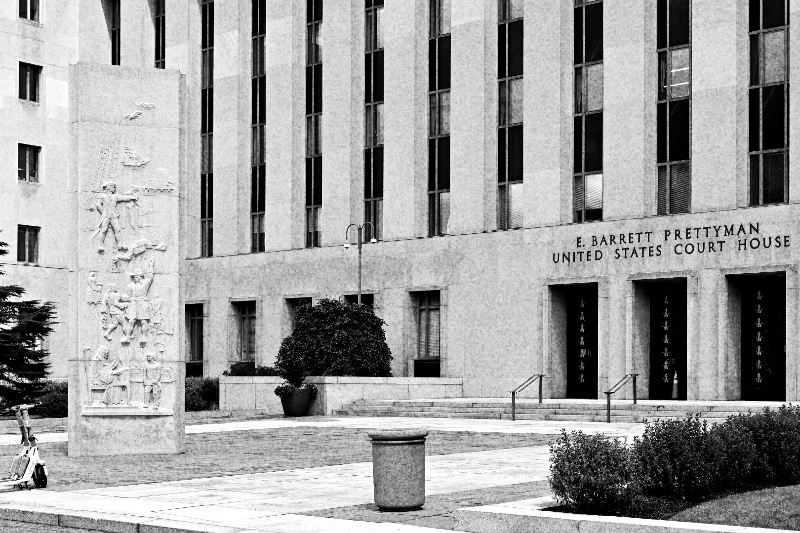
James Brooks — CC BY 2.0, via Wikimedia Commons
Judge Sharon L. Gleason dismissed the Justice Department’s suit over Alaska’s Senate count on Sunday 1 November, ruling that the United States lacked standing because no court could grant the remedy it sought without breaking the secrecy of the ballot.
The 20-page order in United States v. State of Alaska, No. 3:26-cv-00376, grants all three motions to dismiss, refuses leave to amend and directs the clerk to close the case. Judgment was entered the same day. So was the department’s notice of appeal to the Ninth Circuit, a single sentence signed by Associate Attorney General Stanley E. Woodward Jr. and an assistant United States attorney, two days before the election the suit was about.
The suit asked the court to stop Alaska certifying the result if Senator Dan S. Sullivan loses and would have won had every vote for a second candidate, Daniel J. Sullivan Jr., gone to him instead, “pending an investigation to determine whether votes cast for Daniel J. Sullivan were meant to be cast for” the senator. This publication examined the original complaint filed on 22 October and the amended complaint filed a week later.
What did the judge actually decide?
Jurisdiction, not the merits. Article III of the Constitution limits federal courts to live cases and controversies, and a plaintiff must show an injury, caused by the defendant, that a court order would likely redress. The state had invited the court to skip standing and dismiss for failure to state a claim. Judge Gleason declined, quoting Ninth Circuit authority that “the jurisdictional question of standing precedes, and does not require, analysis of the merits,” and decided the case on the third element, redressability, alone.
That leaves a good deal undecided. The order does not say whether the National Voter Registration Act, the statute behind Count One, reaches the certification of results, or whether the Supremacy Clause count added on 29 October states a claim. It does not decide whether Daniel J. Sullivan’s candidacy was meant to mislead. A department spokesperson said the court “dismissed the case on procedural grounds,” CNBC reported. That is accurate as far as it goes. Because a court without jurisdiction “is powerless to reach the merits,” the order explains, the dismissal is formally without prejudice. It is also without leave to amend, because the court found that a further amendment “would be futile.”
Why could no court order grant the remedy?
Because the votes cannot be sorted by voter. Many Alaskans had already voted, the order says, and “those cast ballots have been commingled and cannot now be segregated or the identity of the person who cast each ballot ascertained.” The Alaska Constitution, Article V, section 3, says: “Secrecy of voting shall be preserved.” An investigation into what a Daniel J. Sullivan voter meant would require knowing who that voter was.
The department’s answer to the point, the order records, was one sentence: “Defendants can take measures, including but not limited to the segregation of ballots, to ensure the integrity of Alaska’s elections results, and this Court can order them to do so.” The court called the absence of any further explanation “telling.” It relied on Yazzie v. Hobbs, a 2020 Ninth Circuit decision refusing a postmark deadline for on-reservation Navajo voters because the ballots did not show who had cast them, and adopted that case’s word for such relief: “infeasible.”
Two smaller findings close off the fallback positions. The department said its only immediate request was that ballots be preserved and segregated. Preservation, the court noted, is already required: a state regulation keeps ballots in a federal race for 22 months after the election. And the memorandum seeking a preliminary injunction, filed on 30 October, had no matching motion on the docket and no proposed order, which the District of Alaska’s Local Civil Rule 7.1(b)(2) requires.
The order also quotes the United States Attorney’s press conference of 30 October, at which he said federal and state officers “are working to make sure that your vote counts in a way that you meant and intended it to count.” Voters, Judge Gleason wrote, “may well have concerns regarding the secrecy of their ballot were law enforcement officers to pursue a court-ordered investigation of their intent in the voting booth.”
How fast did the case move?
Eleven days from complaint to judgment, counting both ends. The table is this publication’s compilation from the docket entries it read, with docket numbers as the court assigned them.
| Date | Docket | Filing or order |
|---|---|---|
| 22 Oct | 1 | Original complaint, one count under the registration act |
| 29 Oct | 43 | Amended complaint adds a Supremacy Clause count |
| 29 Oct | 55, 57, 60 | State, campaign and League of Women Voters move to dismiss |
| 30 Oct | 64 | Court orders the US to respond by 1:00 p.m. that day |
| 30 Oct | 66, 67, 70 | US injunction memorandum, omnibus opposition, motion to expedite |
| 31 Oct | 75, 76, 77 | Replies in support of dismissal |
| 1 Nov | 79, 80 | Order dismissing the action; judgment |
| 1 Nov | 81 | US notice of appeal to the Ninth Circuit |
The order also sets out the primary figures on which the dispute rests: Mary Peltola 49.54 per cent, Senator Sullivan 41.40, Daniel J. Sullivan 2.47 and Gerald Heikes 1.05. By this publication’s arithmetic, if every primary vote for Daniel J. Sullivan had gone to the senator he would have reached 43.87 per cent, still 5.67 points behind Ms Peltola. A primary is not a general election, and the ranked-choice count on Tuesday will be different. The figures show the scale of the claim, not its outcome.
What happens next?
An appeal, on a calendar that has almost run out. The notice asks for nothing urgent on its face, and no motion for an injunction pending appeal was among the filings this publication read. The court also leaned on the Purcell principle, under which federal courts should not change election rules on the eve of a vote, and rejected the department’s assurance that it was “not seeking to alter the time, place, or manner of Alaska’s election.” Its requests, the order says, “certainly involve the time, place, and manner of Alaska’s election, which are the responsibilities of the State, not the executive branch of the federal government.” For support it cited the concurring opinions in the Ninth Circuit’s 26 October decision on 20,000 California mail ballots.
The state-level dispute continues separately. Governor Mike Dunleavy has ordered a criminal inquiry into the Peltola campaign, and the Associated Press, in a report carried by PBS News, said he has suggested he may not certify a Peltola victory. The Peltola campaign called the suit “baseless”; the senator told CNN, before the ruling, that he would accept the result if he lost, CNBC reported.
One footnote returns to a detail this publication noted on 30 October. The amended complaint gave the date of Alaska’s primary as 28 August. The court checked the Division of Elections’ summary report and recorded, in footnote 15, that the complaint “erroneously alleges” it. The primary was held on 18 August.
Further reading
- Order Dismissing Action, United States v. State of Alaska, No. 3:26-cv-00376-SLGU.S. District Court for the District of Alaska, via CourtListener
- Judgment in a Civil ActionU.S. District Court for the District of Alaska, via CourtListener
- United States’ Notice of AppealU.S. District Court for the District of Alaska, via CourtListener
- Order on Motion for Expedited ConsiderationU.S. District Court for the District of Alaska, via CourtListener
- Judge dismisses Alaska Senate election lawsuit; DOJ vows appealCNBC
- Judge dismisses lawsuit seeking to block certification of Alaska Senate race if GOP incumbent losesPBS News
Ruth Okonkwo is a house byline used by The 13th Bell’s Law desk. This piece was checked against the sources listed below before an editor approved it. See How we use AI.
Get The 13th Bell in your inbox