The Appeal You Cannot Take
A ruling that decides a case in practice often cannot be appealed until the case ends, which is frequently years after it has stopped mattering.

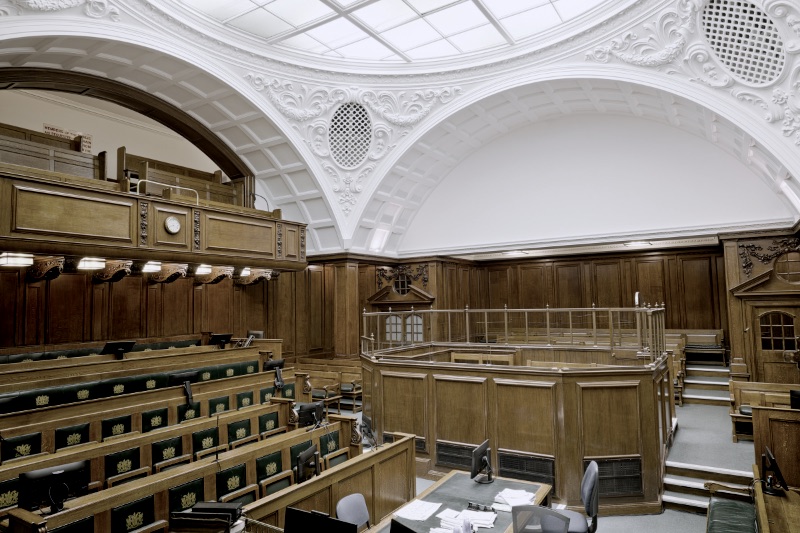
Patrick Feller from Humble, Texas, USA — CC BY 2.0, via Wikimedia Commons
Appeals are meant to correct errors. The system is built so that correction happens once, at the end, on a complete record.
The provision governing appeals before judgment sets out the narrow circumstances in which that rule bends, and the narrowness is the whole subject.
The default is that a party must wait for final judgment. An order that is plainly wrong today is reviewable only after everything else has happened.
The reasoning is sound and familiar. Piecemeal appeals would let a determined litigant stop a case indefinitely, and most interim rulings do not change the outcome.
The difficulty is the subset that do, and the pattern this publication keeps finding is that those are exactly the rulings hardest to review.
The class action context is where the doctrine has been given its own rule, and the exception proves how sharply the general rule bites.
A discovery order that makes a case unaffordable to defend has decided it, and it is an interim order, so it waits.
Certification is reviewable on permission precisely because everyone recognised it decides the case, which is an admission that finality alone is not a workable test.
The published decisions show courts aware of this and reluctant to widen the exception, because every widening invites the delay the rule exists to prevent.
No equivalent exists for discovery, where the same logic applies with at least as much force and far more often.
The certification route is the safety valve. A trial judge may certify a controlling question of law, and an appellate court may then choose to take it.
Why one and not the other is a question of history rather than principle: class certification generated enough pressure to produce a rule, and discovery has not.
Two discretionary gates in sequence is a demanding filter. The judge whose order is challenged must agree it is worth reviewing, and the appellate court must agree again.
That is how most procedural reform happens, and it explains why the categories look arbitrary from outside.
Judges certify sparingly and appellate courts decline often, so a route that exists on paper is rarely available in practice.
The injunction exception is broader and clearer, and it is why so much litigation is framed as a request for interim relief.
An order granting or refusing an injunction is appealable as of right, which gives parties an incentive to characterise disputes in those terms.
The caseload figures show appellate volume that a general right of interim appeal would multiply beyond what the courts could carry.
That constraint is real and it means the rule is defended on capacity grounds while being justified on principle, and the two arguments are rarely separated.
The collateral order doctrine covers a third category: rulings that are conclusive, separate from the merits, and unreviewable later.
Immunity rulings sit there, because an official entitled not to stand trial loses that entitlement the moment the trial begins, whatever happens afterwards.
The description of what the federal courts handle sets out the structure and does not convey how much turns on which box a ruling falls into.
A party arguing for interim review is usually arguing about categorisation rather than about the harm, because the categories are what the rules respond to.
The mandamus route remains for the extreme case, and its standard is deliberately close to unreachable.
What this adds up to is a system that corrects errors thoroughly and slowly, and a class of errors that are effectively final when made.
The reform worth considering is not a wider right of appeal. It is a duty on trial courts to explain, briefly, why a contested interim order does not meet the certification standard.
At present a refusal to certify needs no reasons, so the one discretionary gate that could open is closed without any account of why.
Further reading
- Interlocutory decisions, 28 U.S.C. § 1292Office of the Law Revision Counsel, U.S. House
- Caseload statisticsAdministrative Office of the U.S. Courts
- United States Courts OpinionsU.S. Government Publishing Office
Ruth Okonkwo writes for The 13th Bell on law. This piece was edited and fact checked before publication.
Get The 13th Bell in your inbox