Indonesia’s Assembly Has 60 Days to Pick a New Vice-President After Gibran Rakabuming Raka Resigns
Gibran Rakabuming Raka handed his resignation to the People’s Consultative Assembly on Thursday, hours before the lower house was due to take up an impeachment petition. Under the constitution, President Prabowo Subianto now names two candidates, and the assembly must choose one by 11 January.

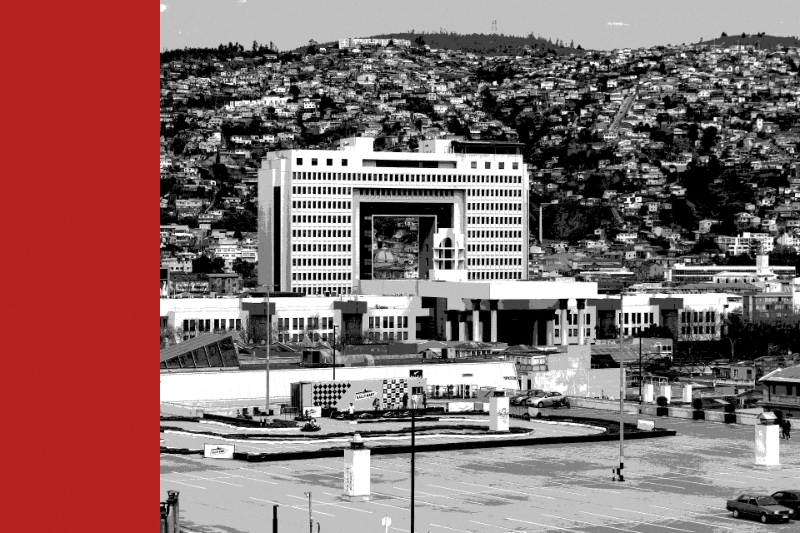
Davidelit — Public domain, via Wikimedia Commons
Gibran Rakabuming Raka resigned as Indonesia’s vice-president on Thursday 12 November, leaving the office vacant. Under Article 8 of the constitution, President Prabowo Subianto must put forward two candidates, and the People’s Consultative Assembly (MPR) must meet within 60 days, by 11 January 2027 on our count, to elect one of them.
Mr Gibran, who is 39 and the son of the former president Joko Widodo, gave his letter to the assembly’s leaders in a 20-minute meeting at the parliamentary complex in Jakarta, the state news agency Antara reported. The MPR’s speaker, Ahmad Muzani, showed it to reporters and read out its main points. Mr Gibran, vice-president for the 2024–2029 term, wrote that he was resigning “at my own request” and “with full awareness, in the interests of the nation and state.” The letter gives no specific reason, Mr Muzani said.
Why he went
The reports agree on the pressure, if not on the letter’s silence. In October the Constitutional Court found no compelling evidence that Mr Gibran held a high-school diploma, which Indonesian law requires of candidates, and the Supreme Court then ruled that a high-school equivalency certificate he had obtained was invalid, ABC News (Australia) reported. Petitioners argued that what he had submitted before the 2024 election was a Ministry of Education supporting letter based on attendance records from a college in Sydney, not a graduation certificate. More than 120 politicians had signed a petition for his impeachment, and the House of Representatives (DPR) was due to meet on it hours after he resigned. Anadolu Agency described the same group as at least 120 lawmakers proposing to use their parliamentary right to express an opinion, the first formal step, and reported that the resignation halted it.
President Prabowo accepted the resignation “with a heavy heart,” called it “statesmanlike” and said he had “been greatly assisted by him,” Anadolu reported. Mr Joko said political positions “inevitably involve political dynamics” and pledged continued support for the government. Mr Gibran is the first directly elected vice-president to leave before completing a five-year term, according to Anadolu. He took office on 20 October 2024; by our count he served 753 days of a term that would have run 1,826, or 41 per cent of it.
What does the constitution require now?
An election inside the assembly, not a new popular vote. Article 8, paragraph 2 of the 1945 Constitution as amended to 2002 provides that when the vice-presidency is vacant the MPR shall hold a session “within sixty days at the latest” to elect a vice-president from “two candidates nominated by the President.” The president chooses the shortlist, and the assembly, which brings together the DPR and the Regional Representatives Council (DPD), chooses from it.
Antara reported a shorter, earlier clock. The MPR will first hold a joint session and then send the president an official letter, and the president has 14 days from the date of that letter to submit candidates; Anadolu put it as two candidates within 14 days. The 14 days therefore start on a date the assembly has not yet set. Mr Muzani said the MPR leadership would meet first and then hold a joint meeting with faction leaders and the DPD, Anadolu reported.
| Step | Rule | Deadline |
|---|---|---|
| Resignation (the route taken) | ||
| Letter to the MPR | Vacancy recorded | 12 November 2026 (day 0) |
| President’s two nominees | Within 14 days of the MPR’s letter (Antara) | Depends on the letter’s date |
| MPR session to elect | Art. 8(2): within 60 days | 11 January 2027 (day 60) |
| Impeachment (the route avoided) | ||
| DPR request to the Constitutional Court | Art. 7B(3): two-thirds of members present, with two-thirds of all members attending | No deadline |
| Constitutional Court ruling | Art. 7B(4): at the latest 90 days after the request | Up to 90 days |
| MPR session on removal | Art. 7B(6)–(7): within 30 days; three-quarters of members attending, two-thirds of those present voting to remove | Up to 30 more days |
The comparison shows what the resignation saved. Impeachment under Article 7A may rest on the grounds that an officeholder “no longer meets the qualifications” of the office, which is close to the case the courts had built, but it needs two supermajorities, a quorum of three-quarters of the whole MPR and a court ruling, and could run 120 days after the DPR acted. The resignation route has none of those thresholds and one 60-day limit. That is this publication’s reading of the two articles; neither the MPR nor the president has said how long the nomination will take.
Who decides the shortlist?
The president alone, on the text, which is the reason the choice is political rather than procedural. Vedi Hadiz, a professor at the University of Melbourne, told ABC that Mr Prabowo must negotiate with coalition partners, his own party and possibly the military, and warned that whoever is chosen could become an internal rival. Mr Joko backed Mr Prabowo’s 2024 campaign by allowing his son to run as vice-president, ABC reported, and the broadcaster described a widening rift between the two men since. The constitution says nothing about the nominees’ party or region, and a president who controls the shortlist can offer the assembly two names from the same faction.
Other systems have handled a vacant number-two post less tidily. Cameroon went six months without filling a vice-presidency it had just created, and in Chile the opposition said it would pursue a constitutional accusation against a minister even if he resigned. Indonesia’s text closes both doors: the vacancy has a deadline, and the impeachment it would have needed no longer has a subject. The next fixed point is the MPR’s joint session, which starts the president’s 14 days.
Further reading
- Gibran resigns as vice president, letter gives no reason: MPRAntara
- Indonesian vice president resigns before completing 5-year termAnadolu Agency
- Indonesia Vice-President Gibran Rakabuming Raka resigns over questions about his eligibilityABC News, Australia
- Indonesia’s Constitution of 1945, Reinstated in 1959, with Amendments through 2002Constitute Project
Iris Nakamura is a house byline used by The 13th Bell’s World desk. This piece was checked against the sources listed below before an editor approved it. See How we use AI.
Get The 13th Bell in your inbox