Governor’s Rule Has a Clock
Pakistan’s federal government has imposed an emergency and governor’s rule in the province run by Imran Khan’s party, and its chief minister is in custody. The Constitution gives governor’s rule two months without Parliament’s approval and six at most.

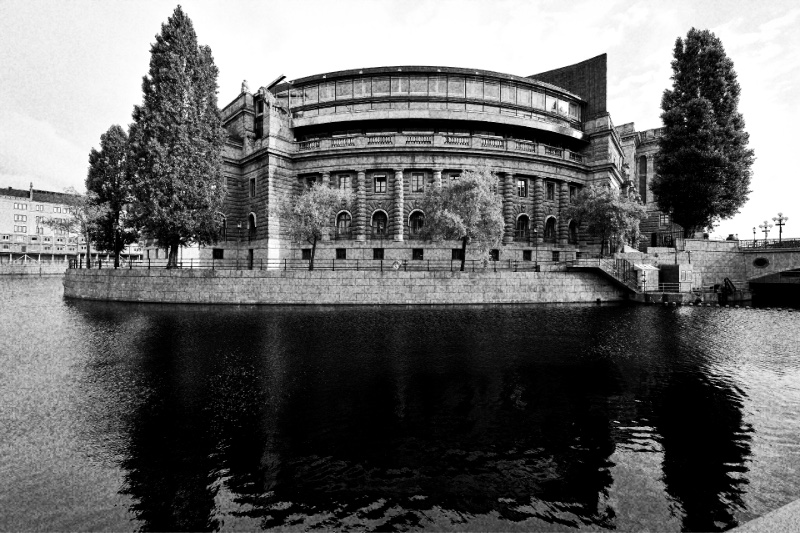
Usman.pg — CC BY-SA 3.0, via Wikimedia Commons
On Sunday 11 October Pakistan’s federal government imposed an emergency and governor’s rule in Khyber Pakhtunkhwa, the province governed by the opposition Pakistan Tehreek-e-Insaf (PTI), after President Asif Ali Zardari approved recommendations from the federal cabinet, Dawn reported. The measures rest on two provisions of the Constitution: Article 232, the emergency power, and Article 234, which covers the failure of constitutional machinery in a province.
The cabinet cited the provincial government’s “deliberate disengagement from the fight against terrorism,” Dawn reported, and authorised the deployment of army troops and assets in aid of civil power. Law Minister Azam Nazeer Tarar said “the fundamental grounds for imposition of emergency are law and order, fight against terrorism, and to save innocent people from the dreadful consequences of terrorist activities,” Al Jazeera reported. PTI rejects the move as unconstitutional.
Two articles, two clocks
Article 234 is governor’s rule. If the President, on a report from the governor, is satisfied that the province cannot be governed in accordance with the Constitution, he may take over the provincial government’s functions or direct the governor to exercise them, and may declare that the provincial assembly’s powers are exercisable by Parliament. Such a proclamation must be laid before a joint sitting of Parliament and “shall cease to be in force at the expiration of two months” unless the joint sitting approves it. It can be extended two months at a time, but “no such Proclamation shall in any case remain in force for more than six months,” according to the text of Part X.
Article 232 is different. It applies where the security of Pakistan is threatened by war, external aggression or “internal disturbance beyond the power of a Provincial Government to control.” For internal disturbance, a resolution of that province’s assembly “shall be required.” If the President “acts on his own,” the proclamation must go to both houses of Parliament for approval within ten days. Any emergency proclamation must be laid before a joint sitting summoned within thirty days, and lapses after two months unless the joint sitting approves it. Once approved, Al Jazeera noted, the emergency has no fixed end date.
The ten-day question
No report says the Khyber Pakhtunkhwa Assembly, which PTI controls, passed a resolution asking for an emergency. Al Jazeera reported that Zardari acted without one and that both houses must therefore approve the emergency within ten days, by 21 October. Dawn read the same clause differently: it said the both-houses requirement applies when the President acts on his own, which it said was not currently the case. Zardari signed the proclamation on the advice of Prime Minister Shehbaz Sharif, according to Al Jazeera. Which reading holds decides whether the government faces a parliamentary vote next week or only the joint-sitting deadline later. Al Jazeera reported that Sharif’s PML-N, the Pakistan Peoples Party and their allies hold a majority in Parliament.
The courts have been asked to step in. On Monday advocate Salman petitioned the Peshawar High Court, naming Zardari, Sharif and the governor as respondents, to declare the emergency and governor’s rule “null and void” and to suspend the notification in the meantime, The Express Tribune reported. No ruling had been reported by Tuesday.
The chief minister
The proclamation provides that the chief minister, ministers, advisers, special assistants and advocate general “shall forthwith cease to hold office,” Al Jazeera reported. The chief minister, Sohail Afridi, is in custody. PTI said on Sunday that he and several ministers and party leaders had been taken, and on Monday officials confirmed that Afridi and some cabinet members were in “preventative custody,” Dawn reported. The Minister of State for Interior said those with pending cases would be charged and tried and others released. PTI says the government has not disclosed where the detained leaders are held.
On Tuesday Afridi’s brother, Muhammad Amir, asked the Peshawar High Court to trace him, produce him if he is held and order his release if the detention is unlawful. The petition alleges that Afridi was “abducted from the premises by unidentified armed and masked individuals” at the Chief Minister’s House at about 2pm on 11 October and calls the detention “wholly illegal, unlawful, without lawful authority and of no legal effect.”
What changed on the ground
An 11-member technocratic advisory council was formed to assist the governor, Faisal Karim Kundi of the Pakistan Peoples Party, and Muhammad Fakhr Alam Irfan was appointed chief secretary, Dawn reported. Kundi called for unity: “Let us come together to bring peace to Khyber Pakhtunkhwa and begin a new chapter of our province’s development.” Shipping containers were placed on roads around Peshawar, and NetBlocks reported a major disruption to internet connectivity in parts of the province, though telecom sources told Dawn there was no province-wide shutdown.
PTI’s chairman, Gohar Ali Khan, called the decision “an extremely alarming and grave political mistake and an undemocratic measure.” The opposition alliance Tehreek-i-Tahafuz-i-Ayin-i-Pakistan called it “a violation of the Constitution.” Talks between the government and the opposition broke down on 3 October, with counterterrorism policy among the main reasons, Dawn reported.
The Constitution fixes the outer edges even where the politics does not. Governor’s rule lapses in two months without a joint sitting’s approval and cannot run beyond six months in all. The emergency’s first parliamentary test may come within days or within weeks, depending on whose reading of Article 232 prevails, and the courts in Peshawar now hold petitions on both the proclamation and the chief minister.
Further reading
- Emergency, governor’s rule imposed in KP as president approves cabinet decisionDawn
- Sohail Afridi’s brother approaches Peshawar High Court to trace his whereaboutsDawn
- What do emergency and governor rule in Pakistan’s Khyber Pakhtunkhwa mean?Al Jazeera
- K-P emergency, governor’s rule challenged in PHC a day after impositionThe Express Tribune
- Constitution of Pakistan, Part X: Emergency Provisionspakistani.org
Claire Vantassel writes for The 13th Bell on world affairs. This piece was edited and fact checked before publication.
Get The 13th Bell in your inbox