Forward Funding Is the Independence
Public broadcasting is protected less by what its charter says than by the fact that its money is appropriated two years ahead.

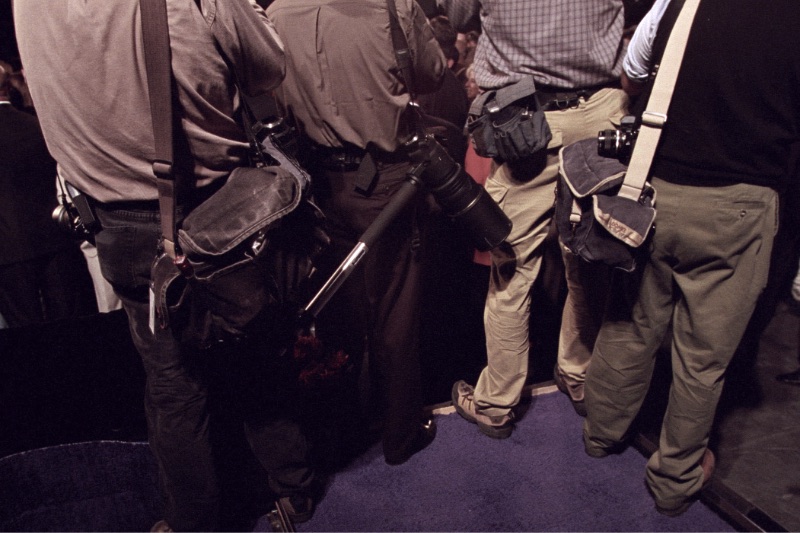
Dejan Krsmanovic — CC BY 2.0, via Wikimedia Commons
Every public broadcaster is built on the same contradiction. It is funded by the state and is supposed to be free to report on it.
The usual answer is a charter: language declaring editorial independence, a board with fixed terms, rules against interference in programming.
The provision establishing the corporation contains exactly that language, and the language is not what does the work.
What does the work is the money, and specifically when the money is decided. Funding appropriated two years in advance is funding that cannot be adjusted in response to last week's broadcast.
That is the whole mechanism. A legislator angered by a programme can propose a cut, and the cut lands on a year in which everyone involved may have moved on.
The comparison with commercial broadcasting sharpens the point rather than settling it.
Immediate retaliation is what chills coverage. A penalty arriving two years later, from a body that has since changed, is a far weaker instrument.
A commercial broadcaster is insulated from political pressure and exposed to advertiser pressure, which operates on the same programmes for different reasons.
The budget documents show the advance appropriation as a line for a fiscal year well ahead of the one being enacted, which looks like an accounting quirk and is a constitutional device.
Neither model is free. Each simply relocates the pressure to a different party, and the choice is about which pressure a society would rather its journalism carry.
It also produces the criticism most often made of the arrangement, which is that it insulates the organisation from accountability as well as from pressure.
What forward funding does is make one of those pressures slow, and slowness is most of what independence amounts to in practice.
That criticism is fair and unavoidable. Any mechanism that makes funding hard to cut in anger makes it hard to cut for good reasons too.
The design accepts that trade, on the reasoning that a broadcaster nervous about next year's appropriation will avoid the coverage most worth doing.
The enacted history shows the structure being adjusted repeatedly while the forward-funding principle survived, which suggests the people amending it understood what it was for.
The vulnerability sits elsewhere, in the fact that the protection is a practice rather than a guarantee.
A legislature can decline to appropriate forward. Doing so requires no repeal of any charter language and would be reported, if at all, as a technical change to a budget schedule.
At that point the organisation is on an annual cycle like any other agency, and the editorial protection written into its founding statute continues to say exactly what it always said.
The register carries the administrative apparatus, and none of it would change either. The words would all survive; only the timing would move.
This is the most useful thing the arrangement demonstrates about institutional design generally, which is that guarantees on paper are weaker than structures that alter incentives.
A charter tells an official what they may not do. A funding schedule changes what it is worth their while attempting, and the second is more reliable than the first.
The same logic explains why fixed terms protect a regulator more effectively than a statement of independence, and why an annual budget undermines both.
For a publication interested in where power actually sits, that is the lesson worth taking: read the appropriation schedule before reading the charter.
The charter tells you what an institution is supposed to be. The schedule tells you how much pressure it can absorb before it becomes something else.
Whether the current arrangement survives is not a question about broadcasting policy. It is a question about whether anyone notices a change to a line describing a fiscal year.
Further reading
- Corporation for Public Broadcasting, 47 U.S.C. § 396Office of the Law Revision Counsel, U.S. House
- Budget of the United States GovernmentU.S. Government Publishing Office
- The Federal RegisterOffice of the Federal Register
Estelle Ferraro writes for The 13th Bell on media. This piece was edited and fact checked before publication.
Get The 13th Bell in your inbox