The Exercise Is the Message
A training rotation is planned as readiness and read abroad as intent. Only one of those is written down.

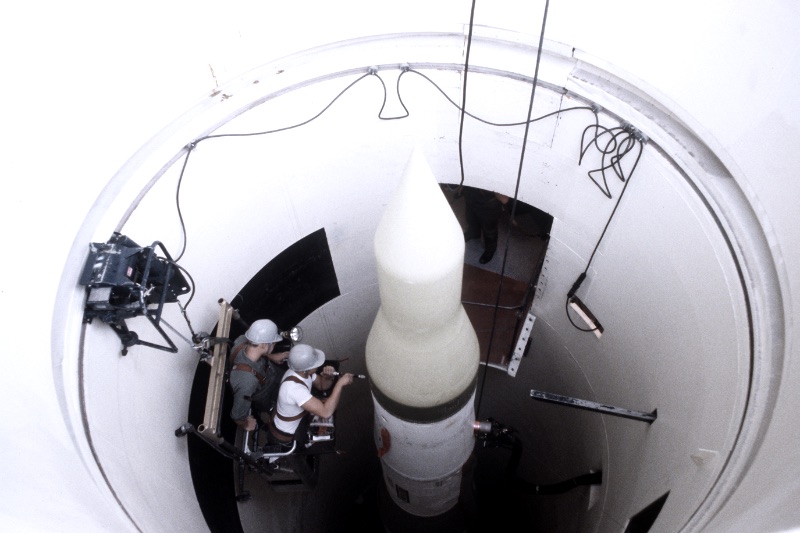
U.S. Navy photo by Mass Communication Specialist 2nd Class Brooks B. Patton, Jr. — Public domain, via Wikimedia Commons
A military exercise has two audiences and one plan. The plan addresses the first audience: units that need to practise something difficult with people they would have to do it alongside. The second audience is everyone watching, and nothing in the plan is written for them.
This is not an oversight so much as a division of labour. The authorities that govern training are about readiness, and readiness is a measurable thing: proficiencies, certifications, hours. The signalling value is real, unbudgeted, and nobody's assigned responsibility.
The result is a recurring mismatch. An exercise is scheduled years out, for reasons of availability and maintenance cycles, and then arrives in a week when its meaning has changed completely.
A rotation planned around a shipyard schedule will still be read as a decision about a crisis it was scheduled long before.
Cancelling carries its own message, usually a louder one. A planned activity that does not happen is legible to everyone as a retreat, which means the choice is rarely between signalling and not signalling. It is between two signals, neither of which was designed.
Combined exercises complicate this further, because the signal is jointly authored. A partner reads participation as a commitment, an adversary reads it as a coalition, and the administrative arrangements governing it say nothing about either, because they are about liability, funding and command relationships.
The domestic layer matters too and is often the least examined. Exercises are funded through the ordinary budget process, which means their scale is set by appropriations written for readiness metrics rather than by any assessment of what the activity communicates.
So the volume of the signal is a budget artefact. A larger exercise says more, and it is larger because of a line item, not because anyone decided that more needed saying.
The useful reform is procedural and cheap: require that the planning documents for a major exercise contain a short section stating what the activity is expected to communicate, to whom, and what would count as it being misread.
That does not subordinate training to messaging, which would be its own failure. It forces the two into contact, which at present happens only after the fact and usually in response to a question from a journalist.
The alternative is what exists now. A schedule built for maintenance windows produces a sequence of statements about intent, made in a language the planners are not writing in, to audiences they are not required to consider, with consequences that arrive as surprises.
Security cooperation is one of the few instruments that is cheap, repeatable and reversible. It is worth knowing what it is saying.
There is a further complication that planners raise and commentary rarely does, which is that the signal is read differently by each audience and cannot be tuned for one without affecting the others.
An exercise sized to reassure a partner is, by construction, sized to alarm somebody else. The same activity is simultaneously a commitment, a threat and a routine training event, and all three readings are available from the same facts.
That is not an argument for doing less of it. It is an argument for the planning document saying which reading is intended, so that a misreading can be identified as one rather than absorbed as a surprise.
The alternative is what happens now, where the intent is reconstructed after the fact by officials answering questions about a decision that was taken for reasons of maintenance scheduling two years earlier.
The scheduling constraint deserves more sympathy than it usually gets. Ships come out of maintenance on fixed cycles, units have training windows, and a partner's availability is set by its own calendar.
Those constraints are real and they are the reason an activity lands when it does. A planner is solving an availability problem, not composing a statement, and the statement is a by-product they were never asked to consider.
Which is why the proposed fix is a paragraph rather than a restructuring. Nothing about the scheduling has to change for the planning document to record what the activity is expected to communicate.
The value of writing it down is that it can then be wrong in a way somebody notices. An intent that exists only in the heads of the people who set the date cannot be checked against how the activity was actually read.
Further reading
- Title 10, Armed ForcesOffice of the Law Revision Counsel, U.S. House
- Title 32, National DefenseU.S. Government Publishing Office
- Budget of the United States GovernmentU.S. Government Publishing Office
Gregor Vance writes for The 13th Bell on security. This piece was edited and fact checked before publication.
Get The 13th Bell in your inbox