The Threshold Is the Design
Money in politics is reported above a line and invisible below it. Where the line sits decides what the public is allowed to see.

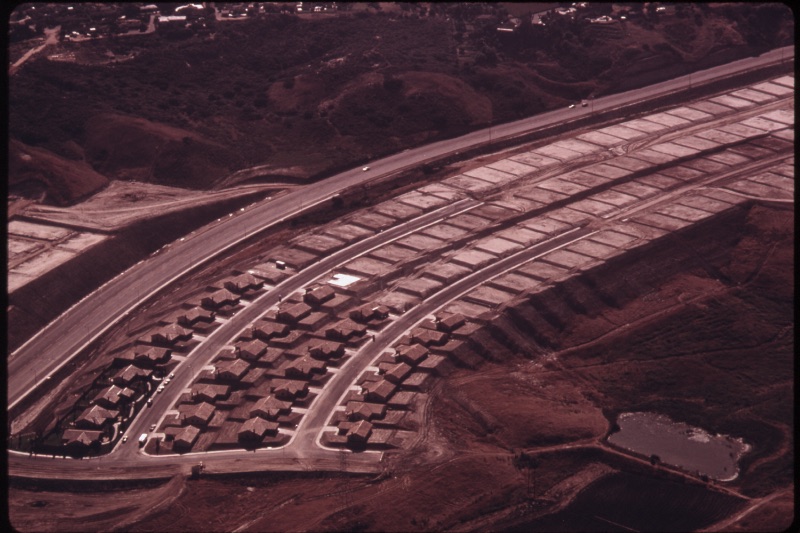
Auckland Museum Collections from Auckland, Aotearoa New Zealand — CC BY 2.0, via Wikimedia Commons
Disclosure is the compromise every democracy reaches about political money. Rather than limiting who may give, require that giving be visible, and let the public judge.
The reporting provision sets out what must be filed and when, and the machinery around it is elaborate, well-enforced and genuinely public.
It is also bounded. Contributions below a threshold are aggregated rather than itemised, and spending below a threshold generates no report at all.
Thresholds are necessary. A regime capturing every five-dollar contribution would impose enormous cost on small committees for information nobody would use.
The question is never whether to have one. It is where it sits, and that is a policy decision made in a numeric provision that reads like an administrative detail.
There is a second threshold that receives no attention at all, which is the point at which a filer stops being an individual and becomes an organisation.
The published filings show what the current line captures, and the more instructive exercise is imagining what a line half as high would capture.
Below it a person reports nothing about themselves beyond a name and an employer. Above it an entity files continuously and is examined.
The number matters more over time than at any moment, because thresholds are set in nominal terms and inflation moves them without anyone voting.
The gap between those two regimes is where most of the structuring happens, and it is a gap created by two separate provisions that were never designed against each other.
A threshold fixed decades ago and never indexed has quietly risen in real terms every year since, disclosing progressively less of the same activity.
That is the recurring failure in threshold design: each line is set sensibly on its own terms, and nobody is responsible for the space between them.
That is a substantive change in transparency policy occurring continuously, in one direction, with no decision behind it and no announcement when it passes any particular point.
The implementing regulations carry the operative detail, including how contributions are aggregated and when a series of small gifts becomes reportable.
Aggregation is the part that determines whether the threshold can be worked around. A rule counting each gift separately invites splitting; one counting a cycle's total does not.
The current framework aggregates, which is the right design, and the aggregation applies per committee rather than across them.
So a donor giving below the line to many committees supporting the same end is disclosed nowhere, and nothing about that requires concealment or coordination.
The independent spending side is where thresholds do the most work, because the reporting obligations attach to the spender rather than to the source of the funds.
An organisation spending above the line reports its spending. Whether it reports where the money came from depends on its form, which is a choice its founders make.
The register carries changes to the rules, and reading a run of them shows the thresholds and definitions moving in small technical increments over many years.
No single amendment amounts to much. The cumulative effect of twenty of them is a disclosure regime covering a materially different share of the activity than the one enacted.
This is the pattern this publication keeps finding, and political money is where it has the highest stakes, because the information exists to inform a vote.
Information arriving after the vote is not disclosure in any useful sense, and reporting deadlines are the second lever nobody discusses.
A report filed quarterly is a report that can be filed after an election, and the spending it describes has already had its effect by the time anyone reads it.
The reforms that would matter are unglamorous: index the thresholds so they stop drifting, aggregate across affiliated committees, and require reporting fast enough to be read before polling.
None of that limits anyone's giving or speech. It only ensures the compromise the country actually made — visibility instead of limits — continues to mean what it meant when it was struck.
Further reading
- Reporting requirements, 52 U.S.C. § 30104Office of the Law Revision Counsel, U.S. House
- Campaign finance dataFederal Election Commission
- Title 11, Federal ElectionsU.S. Government Publishing Office
Miriam Halloway writes for The 13th Bell on politics. This piece was edited and fact checked before publication.
Get The 13th Bell in your inbox