The Deterrent Comes Without an Umbrella
Finland has joined France's European nuclear initiative, the tenth country to do so. It gets consultation, exercises and the possibility of visiting French aircraft. It does not get a guarantee, and neither does anyone else.

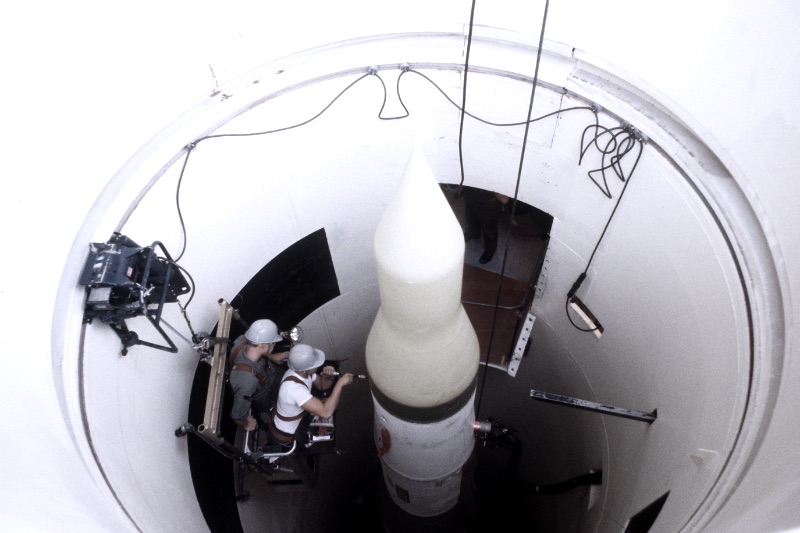
U.S. Air Force photo by Airman 1st Class Albert Morel — Public domain, via Wikimedia Commons
Finland has joined France's European nuclear deterrence initiative, announced after President Alexander Stubb's talks with President Emmanuel Macron in Paris. It is the tenth country to take part.
Stubb was specific about what that does not mean. Finland will not host nuclear weapons in peacetime — "There would be no sense in that," he said — and the initiative provides neither a French nuclear umbrella nor any collective defence guarantee. Finland's nuclear deterrence, he said, still rests on NATO and the United States.
That leaves an obvious question. If it is not a guarantee, what is it?
The answer starts with what Macron announced at the submarine base on Île Longue in March. France would increase its warhead stockpile for the first time in decades and stop publishing its size. It would build structured nuclear dialogue with European partners, including joint threat assessments, visits to nuclear sites and participation in exercises.
And it could temporarily deploy nuclear-capable Rafale aircraft to allied bases, for exercises or to send a signal.
The weapons, the chain of command and the decision to use them remain entirely French. France continues to decide for itself what threatens its vital interests, a phrase its doctrine has always left deliberately undefined, and which Macron has said has a European dimension without saying where that dimension ends.
NATO's own account of its nuclear deterrence describes a different arrangement, and the contrast is the point.
NATO's deterrent rests on American, British and French forces, but its distinctive feature is nuclear sharing: American weapons stored in Europe, allied aircraft and crews trained to deliver them, and consultation through the alliance's nuclear planning structures. It is an alliance commitment backed by a treaty obligation to treat an attack on one as an attack on all.
The French initiative has no sharing and no treaty guarantee. A partner is not trained to carry French weapons and has no role in deciding whether they are used. It is closer to a standing invitation to be close to French deterrence than to be covered by it.
The Non-Proliferation Treaty is part of why the design looks this way. A nuclear state that keeps sole control of its weapons, and transfers neither them nor control over them, stays well inside the treaty's lines. Arrangements that put weapons in other states' hands invite exactly the legal argument France has avoided.
For Finland the change is more than symbolic, because it runs alongside a change in its own law.
Finland's Nuclear Energy Act has since 1987 prohibited importing, manufacturing, possessing or detonating nuclear explosives on Finnish territory. The government has said it will seek to change that, so that nuclear weapons could be present in wartime or under threat of war. Defence Minister Antti Häkkänen called the amendment "necessary to enable Finland's military defence as part of the alliance."
That brings Finland into line with its Nordic neighbours, whose restrictions apply in peacetime rather than in all circumstances. It also explains why Stubb's phrasing was so careful. The line Finland is drawing is not between nuclear and non-nuclear. It is between peace and war.
Finland's defence ministry and its French counterpart are to set up a joint working group to decide what practical cooperation looks like, in a process that could run ten to fifteen years. The length is itself informative. Deterrence relationships are built through habits — exercises, visits, planning — long before they are tested.
The initiative's value, then, is ambiguity pointed at an adversary. A Russian planner cannot know how France would read an attack on a partner whose bases French nuclear-capable aircraft have used, and France has designed its doctrine so that it does not have to say.
The cost is ambiguity pointed at the partner. Finland knows exactly what NATO has promised it. What France has promised is that it will keep deciding.
That is not nothing, for a country with a 1,340-kilometre border with Russia and a long memory of being left to defend itself. It is also not an umbrella, and the ten governments that have joined have all been told so in terms.
Further reading
- Nuclear deterrence policy and forcesNorth Atlantic Treaty Organization
- Nuclear Energy Act (990/1987), unofficial translationFinlex, Ministry of Justice of Finland
- Treaty on the Non-Proliferation of Nuclear WeaponsUnited Nations Office for Disarmament Affairs
Gregor Vance writes for The 13th Bell on security. This piece was edited and fact checked before publication.
Get The 13th Bell in your inbox