The Deposit Is the Archive
Publishers must send copies of what they publish to a national library. The obligation is old, cheap, and the reason anything survives.

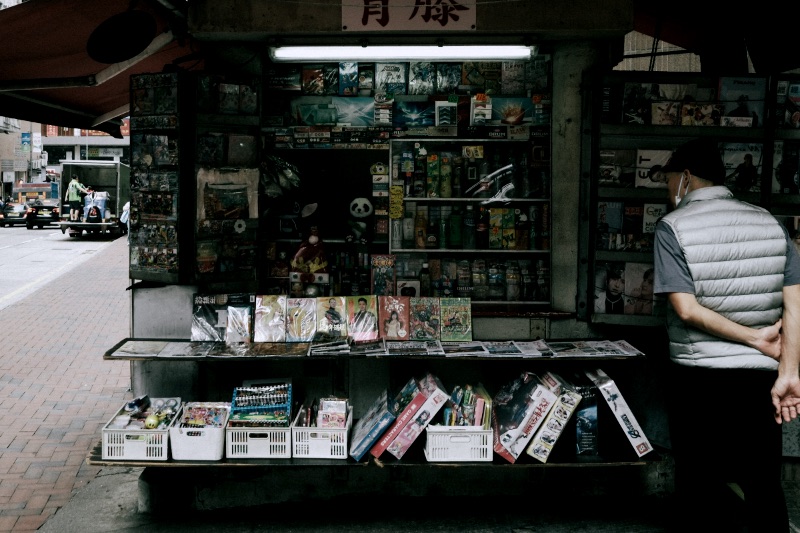
Bhullargraphic — CC BY-SA 4.0, via Wikimedia Commons
The national record is usually described as something curators built. Mostly it is something publishers were obliged to hand over.
The deposit requirement obliges the publisher of a work published in the country to send copies to the national library, shortly after publication.
It is not a condition of copyright and it is enforceable by demand and penalty, which makes it an unusually direct instrument.
The genius of the design is that it costs the state almost nothing. A library that had to buy its collection would collect a fraction of what this produces.
It also collects indiscriminately, which is the property that makes it valuable and the one curators would never have chosen.
There is a preservation dimension that deposit alone does not solve and is often assumed to.
A selecting institution acquires what it judges important. A deposit system acquires what was published, including everything nobody thought would matter.
A copy received is not a copy kept. Physical deposits need storage and conservation, and electronic ones need migration as formats fall out of use.
The national collections are built on that, and the material historians end up needing is overwhelmingly the ordinary stuff nobody would have selected.
The obligation transfers the object and not the cost of keeping it, and the keeping is the expensive part over any long horizon.
Trade catalogues, timetables, local directories and pamphlets survive because a rule required them, not because anyone valued them at the time.
A library receiving more than it can process accumulates a backlog, and a backlog is indistinguishable from a gap to anyone trying to use the collection.
The office that administers it handles the mechanics, and the mechanics are where the obligation has aged.
The requirement attaches to publication, and publication was once an event that produced physical objects somebody could post.
A work published online has no copies in that sense, and the rules have been extended to cover electronic works in defined categories through demand rather than automatic deposit.
Demand-based collection is selective by construction. Somebody has to know a work exists and decide to ask for it, which reintroduces exactly the curatorial filter deposit was avoiding.
The regulations set out the categories and the process, and the categories are narrower than the range of what is now published.
So the system that captured the ordinary record of the print era captures a much thinner slice of the present one, and the thinning is invisible.
The compliance question compounds it. Deposit was always under-complied with, and enforcement has always been light, because pursuing a small publisher for two copies is not worth anyone's time.
In a print economy the shortfall was tolerable, since the largest publishers complied and most significant work came through them.
Publishing has since dispersed to an enormous number of very small publishers, which is exactly the population the enforcement model was never designed to reach.
None of this is an argument that deposit has failed. It remains the single most productive collection mechanism any state operates.
It is an argument that the mechanism rests on an assumption about what publishing looks like, and the assumption has quietly stopped holding.
The fix is not more enforcement, which would cost more than it collects. It is automatic deposit for electronic works in the same broad way it applies to print.
That would be a substantial administrative undertaking, and it is the only version of this obligation that would collect the ordinary material the print system collected by accident.
The international dimension adds a gap that is easy to miss. Deposit obligations are national, and a great deal of what a country reads is now published elsewhere.
A national collection built on national deposit will therefore under-represent exactly the material its readers spent most time with, and no single state can fix that alone.
Further reading
- Deposit of copies, 17 U.S.C. § 407Office of the Law Revision Counsel, U.S. House
- Library of CongressLibrary of Congress
- U.S. Copyright OfficeLibrary of Congress
Estelle Ferraro writes for The 13th Bell on media. This piece was edited and fact checked before publication.
Get The 13th Bell in your inbox