Cleared for Competition, Stopped for Security
Germany’s cabinet has blocked China’s state-owned Cosco from buying 80 per cent of the Hamburg logistics firm Zippel. The competition authority cleared the same deal in February. The two reviews ask different questions, and only one of them needs the whole government.

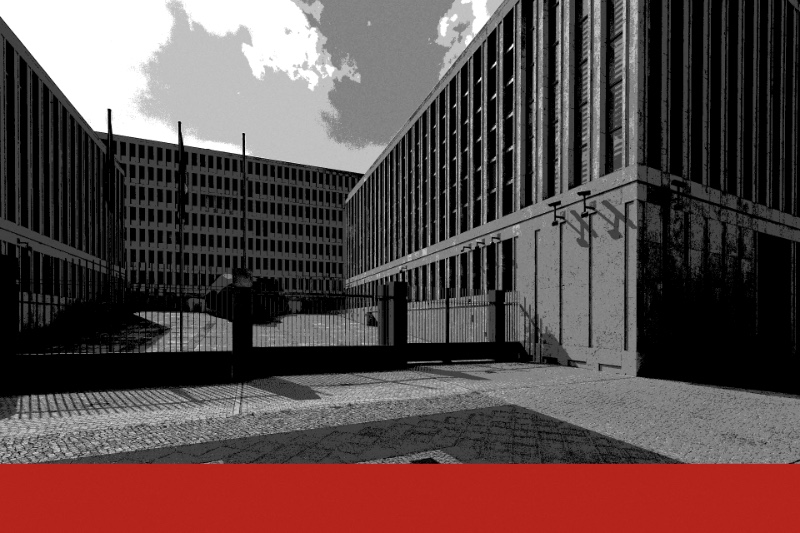
Kailas98 — CC BY-SA 3.0, via Wikimedia Commons
The German government has blocked the sale of 80 per cent of the Hamburg logistics company Zippel to Cosco, China’s state-owned shipping group. A spokesman for the Federal Ministry for Economic Affairs and Energy announced the decision after Wednesday’s cabinet meeting and said the ministry would issue a formal prohibition order, Der Spiegel reported, citing dpa. The reason, he said, was security concerns: “The acquisition would have deepened dependencies and endangered the resilience of the supply chains of Germany and the EU,” in this publication’s translation. Germany welcomed foreign investment, he added. “At the same time, there can be investments that endanger the security of the country.”
Zippel moves containers by rail, barge and lorry between the North Sea ports, Hamburg and Bremerhaven among them, and inland industrial centres in eastern Germany. Anadolu Agency put its annual turnover at €80 million and its staff at 210, and reported that it handles more than 35 per cent of the volume at the Berlin, Schkopau and Elsterwerda terminals; Der Spiegel and dpa put its workforce at around 350. Its managing director, Axel Plaß, had planned to keep 20 per cent and stay in charge. He said he took note of the decision. “We would have wished for a different result and still consider our business decision to be correct,” he said, according to Der Spiegel; day-to-day business would continue unchanged. None of the reports read carried a response from Cosco.
Two reviews, two questions
The same purchase had already been cleared once. In February the Federal Cartel Office approved it under competition law. Its president, Andreas Mundt, said then that Cosco mainly moves containers by sea while Zippel organises their onward transport inland, so that the two “operate at different levels of the transport chain and are not in direct competition with each other,” as Der Spiegel quoted him, in this publication’s translation. Questions of foreign trade law and security, the office said at the time, belonged to the economy ministry.
That is a different test. Section 4 of the Foreign Trade and Payments Act allows restrictions to protect “the public order or security” of Germany or another EU member state, and section 5(2) applies that power to purchases of German companies by buyers from outside the EU where the purchase is likely to impair it. The implementing ordinance lets the ministry examine such a purchase under section 55; for an ordinary company, section 56 brings a purchase into review once the buyer reaches 25 per cent of the voting rights, a line an 80 per cent stake passes several times over. Under section 59, the ministry may then prohibit the purchase, and to enforce a prohibition it may suspend the buyer’s voting rights or appoint a trustee, at the buyer’s cost, to unwind a completed deal.
The ministry cannot do that alone. Section 13(3) of the Act says that a prohibition in this kind of review “requires the consent of the federal government,” which is why the decision went to the cabinet. The cabinet took it without discussion, Anadolu reported.
What the government says it weighed
The ministry’s spokesman described the test as whether the acquisition was likely to endanger public order or security. The government says it examines about 300 acquisitions a year and has prohibited one eight times in all, Der Spiegel reported. It became known at the end of April that the Federal Office for the Protection of the Constitution, the domestic intelligence service, had concerns about the Zippel deal, and dpa reported, citing security sources, that it was worried about the “cumulative acquisition plans” of the Chinese state group in Germany and the EU. Handelsblatt reported, citing a confidential government paper, that Zippel also plays a significant role in logistics for the Bundeswehr. Anadolu reported that German media had described a risk to supply lines towards Germany’s eastern border in a military conflict.
Cosco is not new to this review. It holds 24.99 per cent of the Tollerort container terminal in Hamburg, a stake the previous government held below 25 per cent in 2022 after examining the original plan under the same Act, Der Spiegel and dpa reported. That decision limited a purchase. This one stops a purchase outright.
The economy minister, Katherina Reiche, had signalled the approach this spring. “You can be sure that we examine investments very closely,” she said at the National Maritime Conference in Emden, according to Der Spiegel, adding that strategic and security points were at the top of the agenda.
Sources
The decision, the spokesman’s statements, the review figures, the Tollerort stake, the Cartel Office’s February clearance and Mundt’s remark, the intelligence service’s concerns, the Handelsblatt report, Plaß’s statement and Reiche’s remark are as reported by Der Spiegel on 7 October, which cites dpa; German quotations are translated by this publication. Turnover, the 210 staff figure, terminal shares, the cabinet’s lack of discussion and the eastern-border concern are as reported by Anadolu Agency. Sections 4, 5 and 13 of the Foreign Trade and Payments Act and sections 55, 56 and 59 of the Foreign Trade and Payments Ordinance were read on gesetze-im-internet.de and are translated here. The prohibition order itself had not been published and was not read.
Further reading
- Bund untersagt Verkauf von Hamburger Logistikfirma an ChinesenDer Spiegel
- Germany blocks Chinese Cosco’s acquisition of logistics firm Zippel on security groundsAnadolu Agency
- Außenwirtschaftsverordnung § 59 Untersagung oder AnordnungenBundesministerium der Justiz
- Außenwirtschaftsgesetz § 13 ZuständigkeitenBundesministerium der Justiz
Gregor Vance writes for The 13th Bell on security. This piece was edited and fact checked before publication.
Get The 13th Bell in your inbox