Article 4 Is a Meeting, Not a Trigger
Invoking it commits the alliance to sit down and talk. That sounds like very little, and the record of when governments have reached for it suggests otherwise.

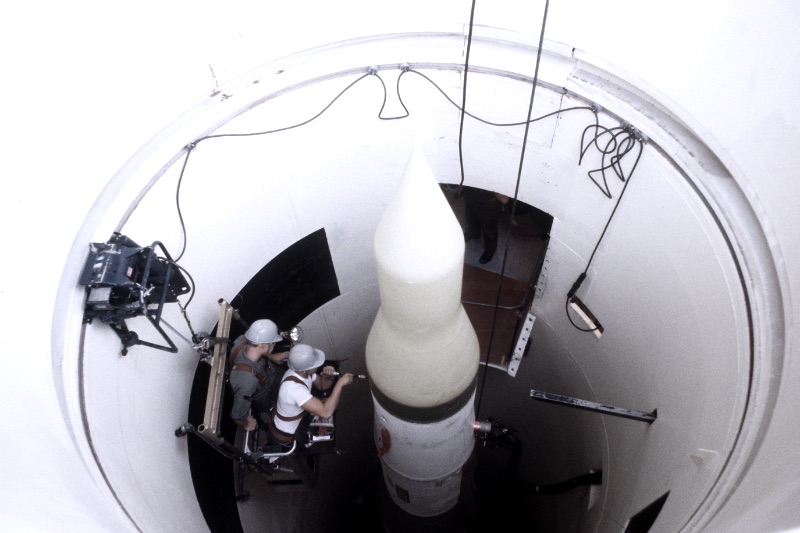
Swadim — CC BY-SA 4.0, via Wikimedia Commons
When a NATO member invokes Article 4, the headlines treat it as an alarm. The article itself promises one thing, and it is a conversation.
The text of the treaty runs to fourteen short articles. The fourth says the parties will consult together whenever, in the opinion of any of them, the territorial integrity, political independence or security of any party is threatened.
That is the entire provision. It contains no obligation to act, no threshold of harm, no timetable, and no mention of force.
The two qualifications inside it are what give it force. Consultation is triggered by the opinion of any single member, and no other government may rule that opinion unfounded.
So the decision to invoke belongs to the country that feels threatened, alone. A meeting follows because one ally asked for it, and the twenty-nine others attend whether or not they share the assessment.
NATO's own account of consultation is careful about what happens next: talks may lead to a collective decision or action, or to nothing beyond an exchange of views.
The venue is the North Atlantic Council, the alliance's standing political body, where each member has one seat and decisions are taken by consensus rather than vote.
Consensus is the operative constraint. Nothing emerges from an Article 4 meeting that every government present accepts, which is why the article can guarantee the meeting and never the outcome.
It is worth separating this from the collective defence clause, which almost everyone reaches for first. Article 5 concerns an armed attack, treats it as an attack on all, and commits each ally to take the action it deems necessary.
Even Article 5 stops short of automatic war, since each member judges what action is necessary and assistance may take forms other than force. But it applies only after an armed attack, and it has been invoked exactly once, after 11 September 2001.
Article 4 covers everything below that line, which is where the current era mostly operates: a drone crossing a border, an aircraft in the wrong airspace, a cable cut on the seabed, a mass of people moved to a frontier.
None of those is an armed attack in the treaty's sense, and treating each as one would either devalue Article 5 or commit the alliance to fight over an incident nobody intends to fight over.
The invocation record shows how the article is actually used. It has been reached for fewer than ten times in seventy-five years, several of those by Turkey over spillover from Syria, and by Poland and the Baltic states after incidents on their territory.
What those cases share is a country deciding that an incident should be entered into the alliance's collective record rather than handled bilaterally. That is the practical effect: an event stops being one nation's problem.
The consequence is mostly procedural, and procedure is not nothing. Once the Council has met on an incident, the alliance has a shared account of it, and the next similar incident is read as a pattern rather than an isolated event.
That matters because escalation arguments are usually fights about characterisation. A single drone is an accident; the fourth drone is a campaign. Consultation is how the second description gets established among allies who would otherwise each judge alone.
There is a cost to invoking, which is why it happens rarely. A government that calls a meeting and secures nothing has demonstrated the limits of its support in public, and the ally that pushed hardest has the most exposed position afterwards.
So the decision to invoke is itself information. It says a member judged the risk of demonstrating disunity lower than the risk of letting an incident pass unrecorded.
The thing to watch after any invocation is therefore not the meeting but what the Council issues when it ends: whether allies agree on the facts, whether they name an actor, and whether anything is deployed.
A statement expressing concern means the alliance met and agreed on very little. A statement naming a state and announcing reinforcements means the consultation did the work it exists to do.
Further reading
- The North Atlantic Treaty, 4 April 1949North Atlantic Treaty Organization
- Consultation: the convening of the North Atlantic CouncilNorth Atlantic Treaty Organization
- The North Atlantic CouncilNorth Atlantic Treaty Organization
Gregor Vance writes for The 13th Bell on security. This piece was edited and fact checked before publication.
Get The 13th Bell in your inbox