The Archive Is the Product
A publication's back catalogue is its most durable asset and the first line cut when the budget moves.

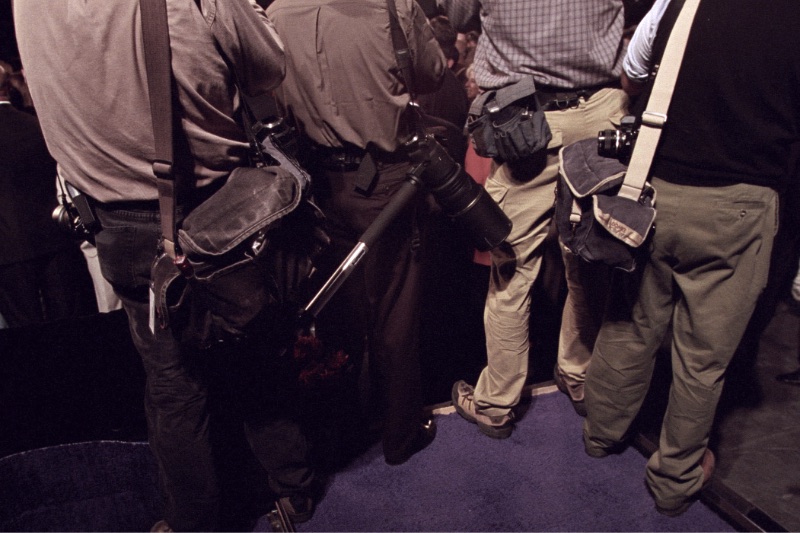
Hansmuller — CC BY-SA 4.0, via Wikimedia Commons
Every publication produces two things. One is the piece running today, which is what the newsroom is organised around. The other is the accumulated record of everything it has ever run, which almost nobody is organised around at all.
The second is usually the more valuable. It is the reason a title can be sold, the basis of whatever authority the masthead carries, and the thing a search engine has been indexing for twenty years. It is also, in accounting terms, a cost centre with no advocate.
This asymmetry has an obvious explanation. The current issue has a deadline and a named editor. The archive has neither. Nothing breaks today if it is neglected, and the neglect is invisible for a long time before it is catastrophic.
An archive fails quietly. It is intact, then partially intact, and then the gaps are discovered by someone looking for a specific thing, years after the decision that caused them.
The failures are rarely dramatic. A content management system is replaced and the old one is not fully migrated. A domain lapses. A redesign drops the templates that older pieces depended on. A rights arrangement covering photography was written for print and does not carry to the web, so the images are pulled and never restored.
The public sector has thought about this harder than the private one, because it has been required to. The federal definition of a record does not turn on the medium, which means the obligation attaches to a database as firmly as to a filing cabinet, and the management rules that follow are written accordingly.
That framing is useful for publishers even where it does not bind them. It treats preservation as an ordinary operating obligation rather than a project, which is the distinction that decides whether it survives a budget round.
It also separates two things that get conflated. Keeping a file is not the same as keeping it usable. A preserved object needs a format that can still be opened, a catalogue that says what it is, and somewhere to put it, and the practical work of preservation is mostly the second and third of those.
Commercially, the archive is where the durable revenue is, which makes the neglect harder to explain. Licensing, syndication, teaching use and republication all draw on the back catalogue. So does the search traffic that arrives on a piece published years ago and never stopped being read.
The counter-argument is that maintenance does not show up in any quarter as growth. That is true and it is the whole of the problem. A cost that prevents a loss you will not observe for a decade loses every budget argument it enters, and it enters one every year.
The publications that handle this well tend to do one unglamorous thing: they give the archive an owner with a budget line, rather than treating it as a shared responsibility of everyone and therefore of nobody.
That is a small organisational change with a large consequence. It converts preservation from a virtue into a job, and jobs survive reorganisations in a way that virtues do not.
The search traffic makes the case better than any editorial argument does.
A back catalogue answers questions people are still asking years later, and the aggregate of that attention frequently exceeds what new work draws in its first week.
Cutting it removes a durable asset to protect a quarterly figure, which is the definition of eating the seed corn.
The archive also underwrites credibility in a way nothing else does, because a publication that can show its record is making a checkable claim rather than an assertion.
Further reading
- Definition of records, 44 U.S.C. § 3301Office of the Law Revision Counsel, U.S. House
- PreservationU.S. National Archives
- Electronic RecordsU.S. National Archives
Helen Straiton writes for The 13th Bell on media. This piece was edited and fact checked before publication.
Get The 13th Bell in your inbox