A Royalty Is the Problem
Faber has stopped selling Sally Rooney’s books in Britain because, it says, it cannot pass on her UK earnings while she has pledged them to a proscribed group. The law that bites is about money, and the Supreme Court hears the ban on 4 November.

Dietmar Rabich — CC BY-SA 4.0, via Wikimedia Commons
Sally Rooney’s books have been withdrawn from sale in the United Kingdom because her publisher, Faber, says British law stops it paying her UK earnings while she has pledged them to Palestine Action, a group proscribed under the Terrorism Act 2000.
“Current legislation in the UK has led to circumstances where Faber cannot pass on UK earnings to Sally Rooney for her work,” Faber said in a statement reported by The National on 14 October. “To sell a writer’s work and not be able to pass on earnings is an unconscionable situation for a publisher.” Rooney said: “I have made every effort to be honest with the public about my beliefs and intentions and I am wholly prepared to accept the consequences.” E-books have been removed from UK sale, while some physical copies remain in bookshops, Al Jazeera reported.
No court has ruled on Rooney’s position, and no charge against her has been reported. The withdrawal is a publisher’s judgment about its own exposure, made before the one hearing that could change the law beneath it.
Why would paying a royalty be an offence?
Because of what Rooney has said the money is for. In August 2025, writing in The Irish Times, she said she would use the earnings of her work to “go on supporting Palestine Action and direct action against genocide,” and that she meant to direct royalties from UK publishers and the BBC to the group, The National reported at the time. Downing Street replied that “support for a proscribed organisation is an offence under the Terrorism Act.” Rooney has since said that further publication of her work could constitute a “serious criminal offence,” according to Al Jazeera.
Faber’s statement does not name a provision. The offences that deal with money are in Part III of the Act. Section 17 makes it an offence to enter into “an arrangement as a result of which money or other property is made available or is to be made available to another” when the person “knows or has reasonable cause to suspect that it will or may be used for the purposes of terrorism.” Section 1(5) provides that a reference to action taken for the purposes of terrorism “includes a reference to action taken for the benefit of a proscribed organisation.” Section 22 sets the maximum sentence on indictment at 14 years.
Read together, those sections reach a payer, not only a donor: a publisher remitting royalties to an author who has said publicly where they will go has, on the face of it, reasonable cause to suspect their use. That is this publication’s reading of the statute. Faber has not said which section it relied on, and no prosecutor has said how they would apply it.
What does the open letter ask?
That the government amend the law. The letter, on the cover of this week’s New Statesman according to Al Jazeera, is signed by figures including the actors Paul Mescal, Susan Sarandon and Tilda Swinton, the broadcaster Gary Lineker, the writers Arundhati Roy, Naomi Klein, J. M. Coetzee, Zadie Smith and William Dalrymple, the filmmaker Jonathan Glazer and the Irish group Kneecap. “Sally Rooney is a writer, not a terrorist. Her books must be available to the public,” it says, calling the withdrawal “an affront to basic principles of free speech and expression so long taken for granted in this country.” It concludes: “We categorically reject censorship – whether direct or indirect – and urge the government to change course, amending the legislation which has led us to this point of repressive absurdity.”
The letter is addressed to Parliament’s choice of law. Faber’s difficulty arises from the Home Secretary’s choice of group, and that choice is what the Supreme Court will examine.
What will the Supreme Court decide?
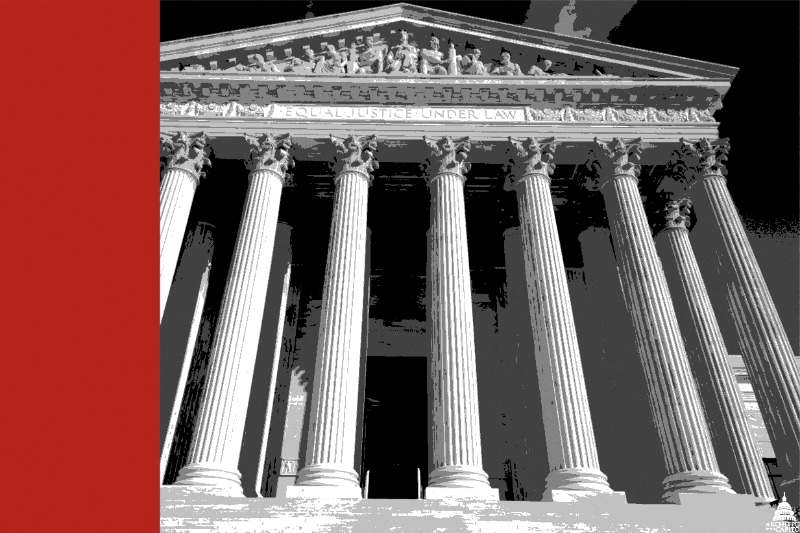
Whether the ban itself was lawful. The court’s case page for R (on the application of Ammori) v Secretary of State for the Home Department, UKSC/2026/0099, lists a full hearing on 4 and 5 November before Lord Reed, Lord Sales, Lord Lloyd-Jones, Lord Briggs and Lord Stephens. The question it states is: “Was the decision of the Secretary of State for the Home Department to proscribe Palestine Action under section 3 of the Terrorism Act 2000 lawful?” The afternoon session on 5 November will be closed to the public.
Huda Ammori, a co-founder of Palestine Action, challenged the proscription, which was announced to Parliament on 23 June 2025 and took effect on 5 July 2025 after both Houses approved the order. The Divisional Court found it unlawful on two grounds: that the Home Secretary’s reasoning was inconsistent with her own proscription policy, and that the ban was incompatible with Articles 10 and 11 of the European Convention on Human Rights. The Court of Appeal reversed. On 29 July 2026 the Supreme Court gave permission to appeal on Ground 1 only and refused it on Ground 2. Its page does not say which argument Ground 1 is.
A ruling for Ammori would remove the proscription on which Faber’s position rests; a ruling for the Home Secretary would leave it in place. Either way, the Court will be deciding whether a group was lawfully banned, not whether an author may be paid. The royalty sits downstream of section 3.
Further reading
- Sally Rooney can no longer sell books in the UK due to Palestine Action supportThe National
- Actors, writers condemn UK anti-terror law targeting Sally RooneyAl Jazeera
- R (on the application of Ammori) v Secretary of State for the Home Department, UKSC/2026/0099The Supreme Court of the United Kingdom
- Terrorism Act 2000, section 17: Funding arrangementslegislation.gov.uk
- UK warns author Sally Rooney after pledge to fund banned Palestine ActionThe National
Thomas Rennick writes for The 13th Bell on Europe. This piece was edited and fact checked before publication.
Get The 13th Bell in your inbox