Alaska Governor Orders Criminal Probe of Peltola Campaign Without Naming a Law
Governor Mike Dunleavy has told Alaska’s state police to investigate whether Mary Peltola’s campaign helped put a second Dan Sullivan on the Senate ballot. His order names no law, and the state’s election-crimes chapter has no offence that mentions recruiting a candidate.

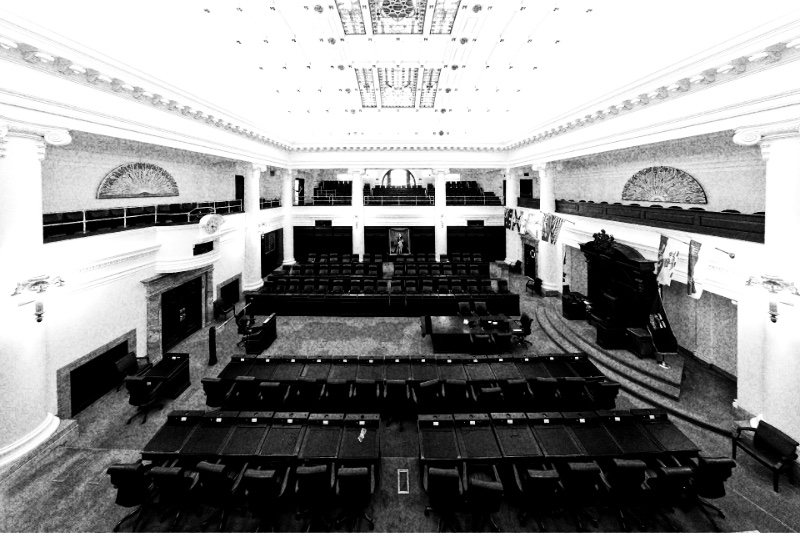
RadioKAOS — CC BY-SA 3.0, via Wikimedia Commons
Alaska Governor Mike Dunleavy has ordered the state Department of Public Safety to investigate whether Mary Peltola’s Senate campaign helped recruit a second “Dan Sullivan” for the 3 November ballot, and whether “criminal charges or civil action are warranted.”
The order came in a post on X late on Wednesday, the Juneau Independent reported. Mr Dunleavy, a Republican, said a report published this week “substantially supports the Division’s findings,” meaning the Division of Elections’ attempt in June to keep the second Sullivan off the ballot. “Deliberately tricking voters into casting their ballots for someone else strikes at the integrity of our elections,” he wrote, CBS News reported. The election is five days away.
The report said that people connected to Ms Peltola’s campaign and to the Democratic Senatorial Campaign Committee (DSCC) helped recruit Daniel J. Sullivan Jr., a retired teacher from Petersburg, according to the accounts of it by CBS News and the Juneau Independent. Both deny it. A Peltola campaign spokesperson said it “has no involvement with either Sullivan campaign,” and the DSCC said it “is not involved with Dan J. Sullivan,” CBS reported. Ms Peltola, a Democrat, called the report a distraction: “Nobody’s waking up worried about ballot composition.”
Who would investigate, and who would prosecute?
Officials who answer to the governor, at both stages. The Department of Public Safety, whose commissioner directs the division of state troopers, and the Department of Law are both listed as principal departments in AS 44.17.005. Under the Alaska Constitution, “each principal department shall be under the supervision of the governor,” and its head is appointed by the governor and “shall serve at the pleasure of the governor” (Article III, sections 24 and 25). The attorney general is the principal executive officer of the Department of Law, and so is appointed the same way. Under AS 44.23.020, the attorney general shall “prosecute all cases involving violation of state law.”
That is ordinary in Alaska’s structure, not something the order created. It does mean that the office that asked for the investigation appoints the people who will conduct it and the people who would decide on charges. This publication described in August what a governor actually controls; in Alaska, criminal enforcement is on the list. There is a federal track as well. The Justice Department sued on 22 October to stop Alaska certifying a narrow Sullivan loss, a case this publication examined in A Purpose Is Not a Duty. President Trump said on Wednesday that Ms Peltola and the second Sullivan “should be prosecuted,” CBS reported.
Which Alaska law could apply?
The order does not say. Neither the governor’s words as reported nor any of the coverage of them names a statute. Election crimes are collected in chapter 15.56 of the Alaska Statutes, and none of its offences mentions recruiting a candidate. The table sets out the ones closest to the conduct alleged. The summaries are this publication’s reading of the statute’s text.
| Section | Offence | Class | What it requires |
|---|---|---|---|
| AS 15.56.012 | Campaign misconduct, first degree | Class A misdemeanour | Knowingly violating the state campaign-finance chapter, AS 15.13 |
| AS 15.56.014 | Campaign misconduct, second degree | Class B misdemeanour | Unsigned election literature, missing “paid for by” lines, or knowingly false facts damaging a candidate |
| AS 15.56.030 | Unlawful interference with voting, first degree | Class C felony | Force, coercion or payment to make a person vote or not vote |
| AS 15.56.040(a)(3) | Voter misconduct, first degree | Class C felony | A false affidavit, or swearing falsely under an oath required by the elections title |
Each has a gap. The campaign-finance chapter applies, under AS 15.13.010, to elections for governor, lieutenant governor, the legislature, constitutional convention delegates, judicial retention and municipal office. A seat in the United States Senate is not on the list. The voting-interference offence concerns voters, not candidates. The false-oath offence is the only felony that touches a candidacy, because a declaration of candidacy must be “executed under oath” under AS 15.25.030. The oath covers facts: the candidate’s full name, address, residency, age, citizenship, party affiliation and how the name should appear on the ballot. It does not ask why the person is running or who suggested it.
What have Alaska’s courts already decided?
That the state could not remove him for his reasons. On 15 June the elections director, Carol Beecher, found that Mr Sullivan’s declaration was filed “with a purpose to confuse or mislead,” according to the Justice Department’s complaint, which attaches her letter. A superior court reversed her on 26 June and the Alaska Supreme Court affirmed on 29 June. The court held that the state’s authority over a candidacy is limited to constitutional requirements such as age and residency, not the candidate’s intentions, the Juneau Independent reported. Placing spoiler candidates, known as ballot stacking, is generally legal and has been practised by both parties in Alaska, it added. The election law scholar Rick Hasen warned against criminally prosecuting candidates for their political motives, the paper reported.
A criminal case would face the same question in a different form. The court has already decided that motive is not a ground for keeping a name off the ballot. A prosecution would need a false fact on a sworn form, a campaign-finance breach under a chapter that does not cover the race, or an offence the order has not yet identified.
What can change before 3 November?
Very little, on the calendar. Absentee ballots were mailed on 9 October and early voting began on 19 October, according to a filing in the federal case. Both Sullivans are printed on them. The governor’s order sets no deadline for the investigation. In the 18 August primary, Daniel J. Sullivan received 4,107 votes, or 2.47 per cent, according to the Division of Elections’ official results.
The chapter does provide a remedy where a winning candidate’s campaign commits a corrupt practice. Under AS 15.56.110, such an election is voidable, but the section applies to the state legislature and to municipal offices. A seat in the United States Senate is not on that list either.
Further reading
- Dunleavy orders state criminal investigation into Peltola campaign ballot-stacking allegationsJuneau Independent
- Alaska’s governor orders investigation into Peltola campaign over allegedly recruiting second Dan SullivanCBS News
- Alaska Statutes, Title 15, Chapter 56: Election OffensesAlaska Legislature
- The Constitution of the State of AlaskaOffice of the Lieutenant Governor
- 2026 Primary Election, Election Summary Report, Official ResultsAlaska Division of Elections
Miriam Halloway is a house byline used by The 13th Bell’s Politics desk. This piece was checked against the sources listed below before an editor approved it. See How we use AI.
Get The 13th Bell in your inbox