A Hearing Is Not a Finding
The White House has set up a three-member committee, a hearing date and a briefing schedule to supply the process the Supreme Court said Lisa Cook was denied. The committee is made up of the President’s own officials, and what it produces is a recommendation to him.

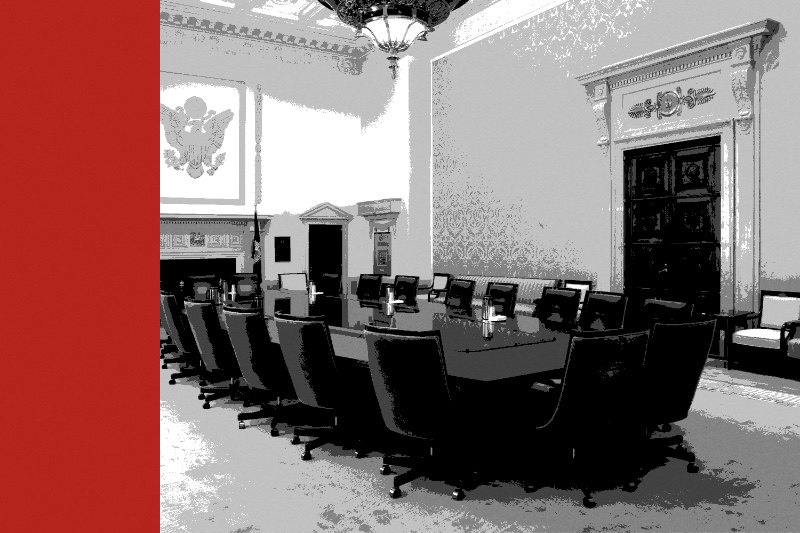
Geraldshields11 — CC BY-SA 4.0, via Wikimedia Commons
A presidential memorandum dated 7 October, posted on the White House website on Friday 9 October, creates what it calls a committee of inquiry to investigate allegations that Federal Reserve Governor Lisa D. Cook “made false statements in connection with one or more mortgage instruments.” The committee will hold a hearing at the White House on 5 November. When it is done, it “shall recommend whether there is cause to remove Governor Cook from her position on the Board of Governors of the Federal Reserve,” according to the memorandum.
The document is a procedure, and the procedure is the story. On 29 June the Supreme Court, by 5 votes to 4, let Cook stay in office while her challenge continues; Chief Justice John Roberts wrote for the majority that “the President failed to afford Cook the procedural protections to which she was entitled by statute,” as SCOTUSblog quoted the opinion. This publication covered that ruling in The Firewall Held, Barely. The memorandum is the administration’s attempt to supply the missing process. It does not remove her. Only the President can do that, and he has not yet tried a second time.
What the memorandum sets up
The committee has three members, named in the memorandum by office: the Assistant to the President for Economic Policy, the Chairman of the Equal Employment Opportunity Commission and the Director of the Office of Government Ethics. SCOTUSblog identifies them as Kevin Hassett, Andrea Lucas and Keith Sonderling, who it says is acting director of the ethics office as well as Secretary of Labor. The memorandum is addressed to those three and to the Attorney General and the Counsel to the President.
The committee may consult personnel from executive departments and agencies, “including the Department of Justice.” It may request documents or other evidence from Cook, and the memorandum says she “shall comply” with any such request. Before the hearing it must give her the evidence it is considering.
The calendar is short. Cook may submit a written position statement, which must be received at least three days before the hearing, so by 2 November. The hearing is in person, at the White House, and may last no longer than four hours. She may file a post-hearing written statement by 10 November. “As soon as practicable” after that, the committee is to send the President written findings of fact and conclusions of law with its recommendation. No date is set for that report.
What Cook may do, and what she must
The memorandum says Cook “shall appear at the hearing and be examined by the Committee, its representatives, and her legal counsel, if any.” She may present argument, written evidence and written witness statements. The committee may question her about representations she or her lawyers make at the hearing, or authorise its representatives, “including Department of Justice personnel,” to do the questioning. The hearing “shall be closed to the public but shall be transcribed.” The memorandum does not say whether the transcript will be released.
The committee “may establish additional procedures or make reasonable changes to the above procedures as necessary or appropriate,” provided it gives Cook adequate notice. The practical meaning is that the rules of the hearing can be changed by the body running it.
The standard the committee must apply
The committee is to report whether there is “cause” for removal within the meaning of 12 U.S.C. 242, “as construed in Trump v. Cook,” which the memorandum cites as 146 S. Ct. 2234 (2026). Section 242 allows a governor to be removed “for cause,” and that phrase is the whole dispute. In the district court, Judge Jia Cobb concluded that Cook was “substantially likely” to show the firing broke the law because the for-cause power does not extend to conduct before a governor took office, SCOTUSblog reported. The Supreme Court did not decide whether the mortgage allegations amount to cause.
The allegations concern 2021, before Cook joined the Board in 2022. The administration says she listed two homes, a condominium in Georgia and a house in Michigan, as her primary residence on mortgage applications. Cook has strongly disputed this. After the June ruling, in a letter dated 5 August, White House Deputy Chief of Staff Dan Scavino told her the President was “considering” her removal and gave her 21 days to respond. Her lawyer, Abbe Lowell, replied on 27 August that the allegations were “unfounded and untrue,” according to SCOTUSblog.
The memorandum asks about “cause” as the Court construed it. It does not say whether conduct before she took office can count. If the committee finds cause on the 2021 facts, the question Judge Cobb raised goes back to the courts.
A process that ends where it began
The structure is notice, a hearing and a decision, which is what the Court said was missing. The difference from a court is who sits. The three members are executive-branch officials who serve at the President’s pleasure, and the person they advise is the President who tried to fire Cook in August 2025. The memorandum states his view of the job plainly: “As President, it is my job to ensure the laws are faithfully executed, including by firing subordinates who cannot be trusted to tell the truth and follow the law.”
Cook’s lawyers, Lowell and Norm Eisen, said they had “grave doubts that this ‘hearing’ is a legitimate one that would conform to the law,” Bloomberg News reported. “We have engaged with the White House to evaluate whether the process proposed has a possibility of being a genuine one and not simply a box checking exercise,” they said, adding that Cook welcomes the chance to clear her name. Senator Elizabeth Warren, the senior Democrat on the Senate Banking Committee, called it “an illegitimate show trial.”
The form itself has a precedent the Court pointed to. Roberts wrote that the process owed to Cook need not include “an audience with the president or a full-blown judicial trial,” and noted that President William Taft once convened a “committee of inquiry” when weighing whether there was cause to remove members of a federal board, Bloomberg reported. The opinion left the shape of a fair process to the White House, and the next court to look at this one will decide whether it was enough.
The dates now do the work. Cook’s statement is due by 2 November and the hearing is on 5 November. The next day, 6 November, the Justice Department and Cook’s lawyers are due to tell the federal judge in Washington how they want to proceed with her original lawsuit, according to Bloomberg. Her post-hearing statement is due by 10 November, and a recommendation follows. If the President then removes her, the next filing is hers, and the question for a court will be whether a hearing run by his own officials is the process the statute requires.
Further reading
Peter Osei-Bonsu writes for The 13th Bell on power. This piece was edited and fact checked before publication.
Get The 13th Bell in your inbox