India’s Supreme Court Asks Why Deleted Delhi Voters Must Refile as New Voters
India’s Supreme Court asked on Wednesday why Delhi voters struck off the draft roll are being told to reapply on Form 6, the form for people who have never voted. About 47 lakh names are missing from the draft, and the court passed no order.

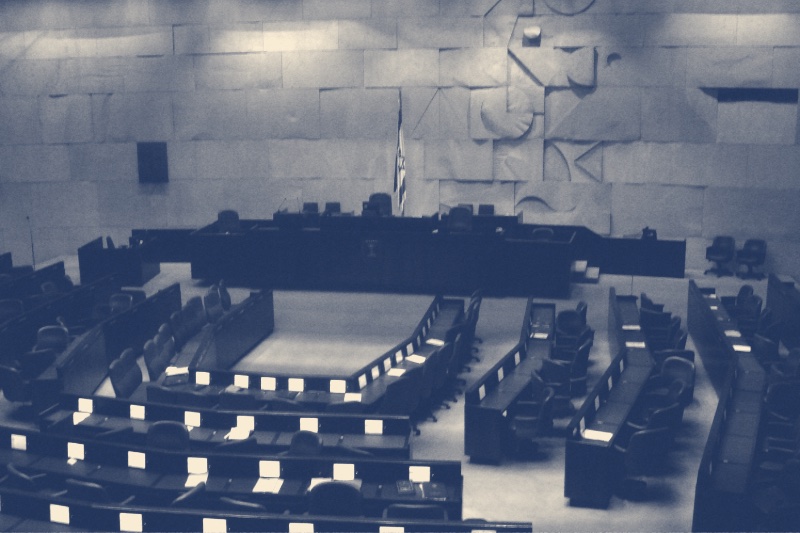
Ramesh Lalwani — CC BY 2.0, via Wikimedia Commons
India’s Supreme Court on Wednesday 28 October asked the Election Commission why Delhi voters dropped from the draft electoral roll must reapply on Form 6, the form for first-time voters, when they were on the 2026 roll. The bench passed no order.
Chief Justice Surya Kant, sitting with Justice Joymalya Bagchi and Justice V. Mohana, was hearing petitions by the activists Anjali Bharadwaj and Amrita Johri against the Special Intensive Revision of Delhi’s rolls, LiveLaw reported. Their counsel, Prashant Bhushan, said that of about 47 lakh people deleted (a lakh is 100,000), about 43 lakh were shown as permanently shifted or absent, and that many had never received the enumeration form on which the revision depends. “We are not new voters,” he told the court. The matter returns in two weeks, LiveLaw reported. The revision has already been contested in Delhi’s streets; earlier this month the authorities locked down the city to stop a rally against the election chief.
What is the difference between Form 6 and Form 8?
One puts a new voter on the roll; the other records a voter who has moved. Form 6 is the application by which a new elector’s name is entered, and it requires the applicant to declare that she has not been an elector before, Scroll reported. Form 8 is for an elector who has changed address. Both are prescribed under the Registration of Electors Rules, 1960, which is why the court said on 5 October that it had approved no modified Form 6. Mr Bhushan’s complaint is that the Commission will not take Form 8 from deleted voters in this revision. “But EC is saying that in this SIR, you can’t fill Form 8, you have to fill Form 6 to be included in the draft list,” he said, according to Scroll. “They are making people fill up a false declaration that they have not voted before.”
The Commission’s answer was that the revision begins from nothing. “The reason why we are calling them first time voters, is it is a clean slate,” Senior Advocate Dama Seshadri Naidu said for the Commission, LiveLaw reported. Justice Bagchi put the consequence back to him: “Because you have erased all lists post-2026. Everyone is a new voter.”
Why does the declaration matter?
Because a false declaration can be an offence. S.Y. Quraishi, a former Chief Election Commissioner, told Scroll that Form 6 is for new voters only, and that “All those who have been forced to fill it have committed a criminal offence carrying one year prison.” The courts have tried to calm that fear without changing the form. On Monday 26 October, in a separate matter from Maharashtra, the Chief Justice told voters who had used Form 6 to restore deleted names: “Do not worry. Nobody will be prosecuted,” Scroll reported. The Delhi High Court on 19 October called one voter’s fear of a false-declaration charge “misplaced”, because the Commission had directed the use of the form. On Wednesday Mr Naidu told the bench there had not been a single prosecution. An assurance from the bench is not an amendment to the rules, and the declaration is still printed on the form.
What do the numbers show?
That few of the deleted voters have used either form so far. Delhi’s draft roll was published on 31 August, and 47.57 lakh of 1.45 crore registered voters were left off it as absent, shifted, dead or duplicated, The Hans India reported; Scroll gives 47.7 lakh, a third of the electorate. Claims and objections were first due on 30 September, and the deadline was extended to 30 October. The figures below are as reported; the percentages are this publication’s arithmetic.
| Measure | Figure | Source |
|---|---|---|
| Registered voters before the revision | 1.45 crore (14.5 million) | The Hans India; LiveLaw |
| Left off the draft roll, 31 August | 47.57 lakh (4.76 million), 32.8% | The Hans India |
| Shown as permanently shifted or absent | about 43 lakh, about 9 in 10 of those deleted | Mr Bhushan, per LiveLaw |
| Form 6 applications received, to 26 October | 2.67 lakh, 5.6% of the deleted | The Hans India |
| Form 8 applications received, to 26 October | 1.01 lakh, 2.1% of the deleted | The Hans India |
| Form 7 objections received, to 26 October | 20,074 | The Hans India |
Forms 6 and 8 together come to 3.68 lakh, or 7.7 per cent of the names left off the draft. Not every application comes from a deleted voter, since genuinely new voters also use Form 6, so the share of deleted voters who have applied to return can be no higher than that, and may be lower.
What did the bench suggest?
A different way back, rather than a ruling. Justice Bagchi said Forms 6, 7 and 8 were “cast in stone”, but that the Commission had residual power to ask voters who did not respond for a declaration explaining why, LiveLaw reported. “Thing is - till your final roll is there, why Form 6? They can file enumeration form,” he said. The Chief Justice asked: “Instead of putting the burden on them that they will approach, why don’t you reach out to them?” He suggested a circular stating that Form 6 is only for first-time registrants in Delhi, publication of the list of deleted names, and asking those voters to file Form 8 through their Booth Level Officer, the official responsible for each polling area.
Mr Naidu said the Commission would examine the concerns, consider extending the deadline, and consider a residual category for people who moved between polling booths, with a form that would not be called Form 6, LiveLaw reported. The Commission assured the bench that the 30 October deadline would be extended, The Hans India reported. The accounts differ on one phrase: LiveLaw quotes Justice Bagchi as saying “Right to vote is a vital right,” and The Hans India as calling it “a vital act”. The final Delhi roll is due on 4 December. Until then, the form offered to a voter who has been on the roll for years still asks her to declare that she never was.
Further reading
- Delhi SIR: Why Deleted Voters Asked To File Form 6 When They Were On 2026 Rolls? Supreme Court Asks ECILiveLaw
- Delhi SIR: Why tell deleted voters to fill Form 6 when they were on 2026 rolls, SC asks ECScroll
- Did EC apply its mind during Delhi SIR deletions? asks SCThe Hans India
- Delhi SIR: Supreme Court Advances Hearing After Plea Flags Deleted Voters Being Asked To Fill Form 6LiveLaw
Iris Nakamura is a house byline used by The 13th Bell’s World desk. This piece was checked against the sources listed below before an editor approved it. See How we use AI.
Get The 13th Bell in your inbox