Norway Says It Has No Say Over the Nobel Peace Prize After Trump’s Port Huron Attack
President Trump told a Michigan rally that he wants no one from Norway because he did not win the Nobel Peace Prize. Norway’s government says it has no say in the prize, and the rules written since 1897 were built to make that true.

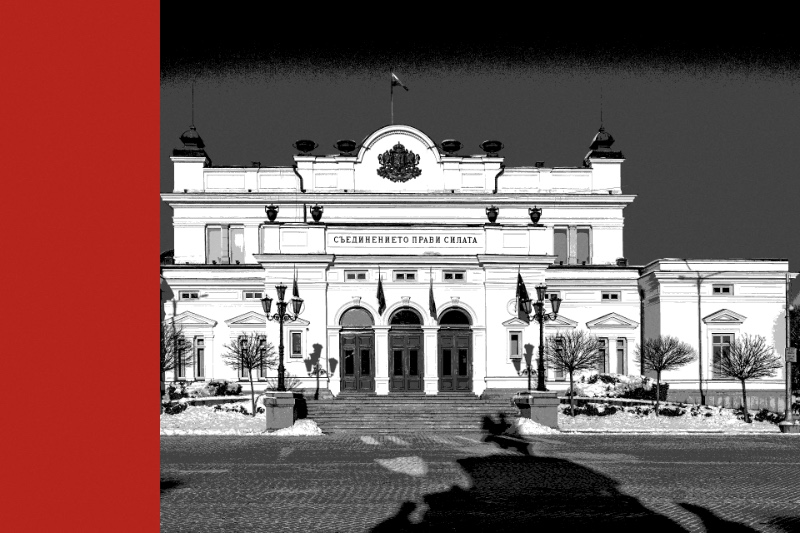
Grayswoodsurrey — CC BY-SA 4.0, via Wikimedia Commons
The Nobel Peace Prize is chosen by a five-member committee elected by Norway’s parliament, not by its government, which is why Oslo’s answer to President Donald Trump’s attack on Sunday 25 October was a reminder rather than an apology.
At a campaign rally in Port Huron, Michigan, Mr Trump said: “Frankly, Norway sucks,” and, after a vulgarity about the country, “I don’t want anybody from Norway. I don’t want anything to do with Norway,” Newsweek reported. He said he would welcome immigrants from some countries but not Norway “because I didn’t get the Nobel Prize,” and called the committee’s choice “a disgraceful and embarrassing decision,” according to an Agence France-Presse report. The 2026 prize was announced on 9 October and went to Navanethem “Navi” Pillay, the South African jurist and former UN human rights chief, “for her efforts to promote peace and international law,” the committee’s announcement says.
The foreign minister, Espen Barth Eide, told the broadcaster NRK on Monday: “He knows very well that the Nobel Committee is independent. We have reminded him of that, in case anyone is wondering, and that is still the case,” AFP reported. Erik Aasheim, head of communications at the Norwegian Nobel Institute, said: “The Nobel Committee is entirely independent of the Norwegian government,” according to Newsweek. AFP reported no official sign of any new US policy on Norwegian visitors or immigrants.
Who actually chooses the Peace Prize?
Five people elected by the Storting, Norway’s parliament, for six-year terms. Alfred Nobel’s will directs that the peace prize be awarded by a committee “of five persons, to be elected by the Norwegian Storting,” and the Storting set the committee up in 1897, the Norwegian Nobel Institute’s account states. Under the rules the Storting later adopted, members may be re-elected, the committee’s make-up is “as far as possible” to reflect the relative strength of the parties in parliament, and the committee chooses its own chair. The Statutes of the Nobel Foundation, section 6, assign the adjudication to that committee.
So parliament fills the seats and the parties’ strength shapes who sits in them. What parliament and government do not have, under these rules, is any role in the decision once the members are seated.
How did the government get out of the room?
In four stages over 120 years. The first committee included the sitting prime minister, Johannes Steen, and foreign minister, Jørgen Løvland, the institute’s history says. The timeline below is this publication’s summary of that account.
| Year | Change |
|---|---|
| 1897 | Storting establishes the committee; first members include the prime minister and foreign minister |
| 1936 | With the prize to Carl von Ossietzky, practice changes to bar current members of the government |
| 1977 | Practice imposed that sitting members of the Storting are not elected; name changes from “the Nobel Committee of the Norwegian Storting” to “the Norwegian Nobel Committee” |
| 2017 | Storting formally decides sitting MPs are not eligible |
The 1936 change is the one the present dispute turns on. The institute says it was made because, with so many prominent politicians on the committee, it had become “difficult over time to convince the surrounding world that the Committee was not influenced in its work by Norwegian authorities.” Prime Minister Jonas Gahr Støre made the same point in January, after an earlier exchange with Mr Trump over the prize: it “is awarded by an independent Nobel Committee and not the Norwegian Government,” Newsweek recorded. This publication noted on 10 October that the American response to this year’s award, sanctions on the International Criminal Court itself, came within hours of the announcement.
Whose terms end this year?
Three of the five. The institute’s member list gives these terms; the count is this publication’s.
| Member | Role | Current term |
|---|---|---|
| Jørgen Watne Frydnes | Chair | 2021–2026 |
| Asle Toje | Vice chair | 2024–2029 |
| Anne Enger | Member | 2021–2026 |
| Kristin Clemet | Member | 2021–2026 |
| Gry Larsen | Member | 2024–2029 |
That gives the Storting, not the government, a majority of the committee to fill or renew for the next period, and the parliamentary record this publication read does not say when it will do so. The Storting has already declined once this year to change how it chooses. On 18 June it debated a Green Party proposal to change the criteria for electing members, and its Presidium, in Innst. 462 S (2025–2026), found “ikke grunnlag” (no basis) for adopting it. Whoever is chosen, the rules require the choice to track party strength, and the people chosen cannot be ministers or sitting members.
What could Washington actually do?
On the US side, the instrument that would turn a rally line into policy is a presidential proclamation. Section 212(f) of the Immigration and Nationality Act, 8 U.S.C. § 1182(f), lets the president, when he “finds that the entry of any aliens or of any class of aliens into the United States would be detrimental to the interests of the United States,” suspend their entry “by proclamation.” None has been issued for Norway. Norwegians travel to the United States under the Visa Waiver Program, in which Norway has participated since 1 October 1991, according to the Department of Homeland Security. This publication has described before how the visa works as an instrument of foreign policy; it is used by documents, not speeches.
The asymmetry is the whole of it. The American president can act on Norwegians by signing one paper. Norway’s government cannot act on the prize at all, because it spent most of a century arranging not to be able to.
Further reading
- The Norwegian Nobel CommitteeNorwegian Nobel Institute
- Announcement, Nobel Peace Prize 2026Norwegian Nobel Committee
- Norway responds after Trump’s sharp wording over Nobel prizeDaily Sabah (AFP)
- Trump Says ‘Norway Sucks’ After Nobel Peace Prize SnubNewsweek
- 8 U.S.C. § 1182: Inadmissible aliensLegal Information Institute
- Visa Waiver ProgramUS Department of Homeland Security
Nadia Belkacem is a house byline used by The 13th Bell’s World desk. This piece was checked against the sources listed below before an editor approved it. See How we use AI.
Get The 13th Bell in your inbox